Did you know that by 2024, over 50% of all consumer spending is projected to occur online? This shows a huge change in how we shop. Digital transformation in retail is now key for success. The global retail industry is set to hit around $7 trillion, making tech in shopping essential.
Looking ahead to 2025, we’ll see a mix of new ideas changing how we shop online and in stores. Retailers must update their strategies to keep customers coming back. This change is not just about keeping up; it’s about growing in a world where almost 3.2 billion people shop online. Getting this shift right can take your business to the next level.
Key Takeaways
- By 2024, over 50% of consumer spending will occur online.
- Mobile devices will account for 60% of online consumer spending.
- Understanding consumer behavior is critical for effective digital transformation.
- Retailers must invest in technology to optimize the customer experience.
- Personalization strategies will be key to retaining existing customers.
- The convergence of technology enhances operational efficiency.
Understanding Digital Transformation in Retail
Digital transformation in retail is a big change for businesses. It’s not just about using new tools. It means changing how businesses work to make shopping better for everyone. With $2.15 trillion spent on it globally in 2023, it’s very important.
To keep up, I need to use new tech like artificial intelligence and augmented reality. These tools help change how retail works.
What is Digital Transformation?
Digital transformation means using digital tech in every part of a business. It makes things run smoother and shopping more personal. Over 90% of companies use cloud tech now.
As global eCommerce sales are set to hit $6.33 trillion in 2024, it’s key. New solutions can make shopping better and help businesses run better too.
Importance of Embracing Change in Retail
Change is urgent in retail because shoppers want more. Over 60% expect companies to know their needs and offer special experiences. Those who don’t adapt might lose customers.
Companies that use omnichannel strategies see a 30% boost in customer happiness. By investing in digital transformation, I can make shopping better and build strong relationships with customers.
Key Trends Shaping the Future of Retail
Looking ahead to 2025, several trends will change retail. They will affect how businesses talk to customers. Generative customer experience will make shopping more personal than ever.
Generative Customer Experience: AI Gets Personal
Generative customer experience uses AI to make shopping personal. Retailers will use AI to offer personalized deals. By 2025, AI could be behind 50% of promotions, making shopping feel more personal.
This change shows how much customers want brands to know them. They want to feel understood by the brands they buy from.
Supply Chain Transparency: From Factory to Feed
More than 70% of shoppers want to know where their products come from. Supply chain transparency is key for retailers. By showing where products come from, brands can gain trust and loyalty.
Retailers are not just selling products. They are showing their values too. This builds a stronger connection with customers.
Social Commerce: Where Influence Meets Income
Gen Z trusts live-streamed product reviews more than ads. This shows the rise of social commerce. Brands need to use social platforms to reach younger shoppers.
Younger shoppers are more likely to interact with brands online. Adding social elements to retail is key.
Experiential Virtual Retail: Beyond the Metaverse Hype
Experiential virtual retail is changing online shopping. By 2025, most retailers will use virtual dressing rooms. This will improve the shopping experience for 80% of customers.
Virtual environments let customers try products in new ways. It’s a big part of the future of shopping.
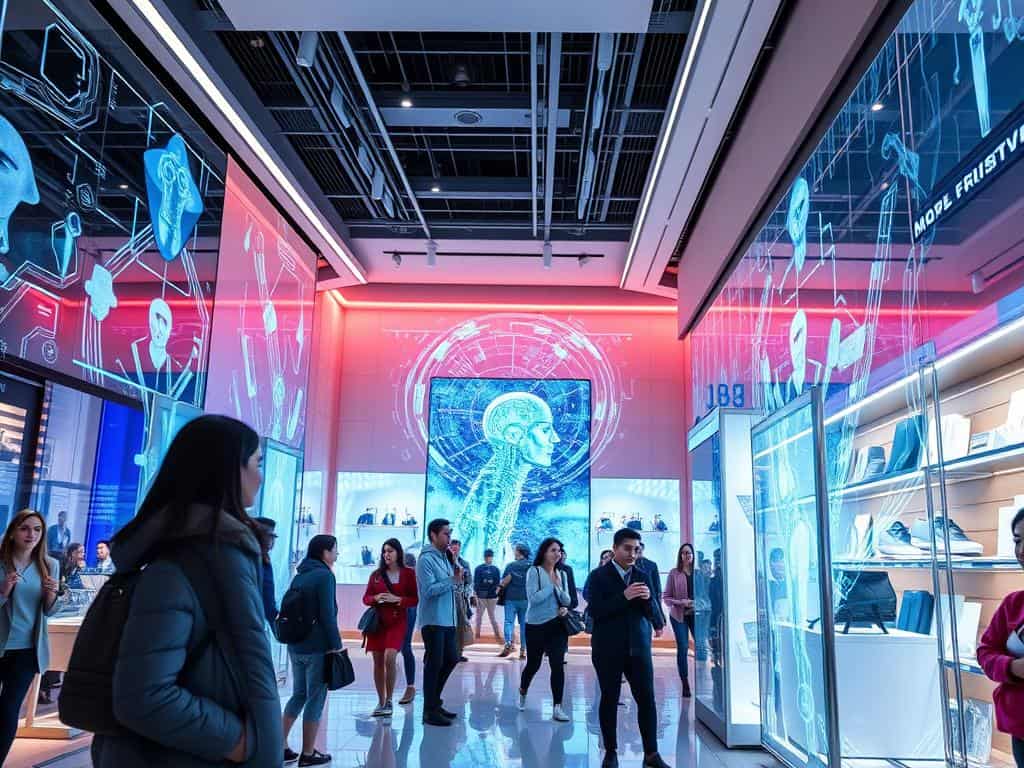
Digital Transformation in Retail: Challenges and Opportunities
The journey to digital transformation in retail is full of challenges and chances. Retailers face big hurdles that need careful planning. One big issue is when employees resist new systems because they’re used to old ways.
Adapting to change is key for success, but many are hesitant. This hesitation blocks progress. Knowing these challenges is vital for any retailer wanting to succeed.
Coping with Change: Resistance to New Systems
Adopting new tech can be slow due to employee resistance. Many fear losing their jobs or getting overwhelmed by new tools. This makes the workplace culture stuck.
Providing good training and support can help. Retailers need to create a space where learning and adapting are encouraged. This helps overcome these obstacles.
Budget Constraints: Cost and Resource Management
Managing a tight budget is a big challenge for digital strategies. Small retailers find the cost of new tech too high. Costs can be from $50,000 to $500,000, depending on the project.
It’s hard to innovate with limited resources. Retailers must plan carefully and set priorities to make the most of what they have.
Improving Customer Retention through Technology
Keeping customers is more important than ever for retailers. Research shows that personalizing experiences can increase retention by 20%. Using AI and big data can help understand what customers want.
In today’s world, customers expect smooth shopping experiences. Meeting these expectations is essential.
Driving Growth with Efficient Marketing Campaigns
Running effective marketing campaigns is key for growth. Retailers must use new strategies that use customer data well. This helps target the right audience.
By using digital tools in marketing, retailers can stay ahead. This ensures they stay relevant in a fast-changing market.
Conclusion
The future of retail is changing fast, thanks to digital technology. Retailers must keep up with these changes to stay ahead. A big 75% of them know that using digital strategies is key to compete.
More and more people want to shop on their phones, with 63% doing so. So, having a strong online presence is now more important than ever.
Using new tech like artificial intelligence and data analytics is also vital. These tools help retailers understand their customers better, with 80% seeing improvements. As shoppers’ needs change, those who focus on personal experiences and shopping across different channels will win their loyalty.
Looking to 2025, adopting these new technologies is not optional but necessary. The digital transformation market in retail is expected to grow a lot. By investing in digital and improving customer experiences, retailers can overcome challenges and thrive in the future.
