Did you know that the audio quality of internal sound cards varies a lot? For example, newer MacBooks like the MacBook Pro can match the quality of external sound cards. This makes many wonder if they really need a dedicated sound card for their audio needs.
I looked into how audio technology has changed over time. I found that built-in solutions have kept up with the need for better sound quality. While many PCs have good built-in audio, some people might want better sound for gaming, music, or creating content. In these cases, an external sound card or DAC could be a good choice.
This section is a starting point for understanding the role of sound cards in today’s audio world.
Key Takeaways
- The audio quality of internal sound cards can vary widely, with some newer models showing great performance.
- Dedicated external sound cards and interfaces can reduce distortion and improve sound quality.
- Thinking about what you need for gaming, music, or content creation can help decide if you need a sound card.
- External audio solutions can solve problems like noise interference and give clearer sound.
- Investing in high-quality DACs can greatly improve your audio experience for listening or creative work.
The Evolution of Sound Cards
Sound cards have changed a lot, moving from separate devices to being part of modern PCs. This change shows how technology has grown and how people want better sound for gaming and music.
From Dedicated Cards to Integrated Solutions
At first, sound cards were key for good sound in computers. The AdLib sound card in 1989 was a big step forward. It made sounds richer than the basic PC speaker.
Later, mid-1980s expansion cards improved sound processing. Now, motherboards have built-in solutions like Realtek’s, giving good sound to most users. But, some professionals need better sound than these can offer.
How Modern PCs Handle Audio
Today’s PCs have great audio processing thanks to advanced motherboard solutions. They offer better sound than before. Yet, problems with audio interference remain.
This interference comes from the CPU, GPU, and other parts. It can make sound worse, hurting gamers and music producers. Even with easier systems, dedicated sound cards are needed to fight these issues.
Sound Card Guide: Benefits of Upgrading
Upgrading to a dedicated sound card can greatly improve your listening experience. It offers benefits that integrated solutions can’t match. Users often notice a big difference in audio quality and clarity, making music and gaming sound better.
Enhanced Audio Quality and Clarity
Switching to a dedicated sound card can significantly improve audio quality. Many users see a 90% boost in audio clarity after making the switch. These cards provide advanced sound reproduction with low distortion levels.
This creates a richer audio environment. Every sound, from beeps to music notes, becomes more vivid. For those who care about sound, using external sound cards like the Focusrite Scarlett series shows a big difference. It highlights the added dynamics and detail that dedicated audio components offer.
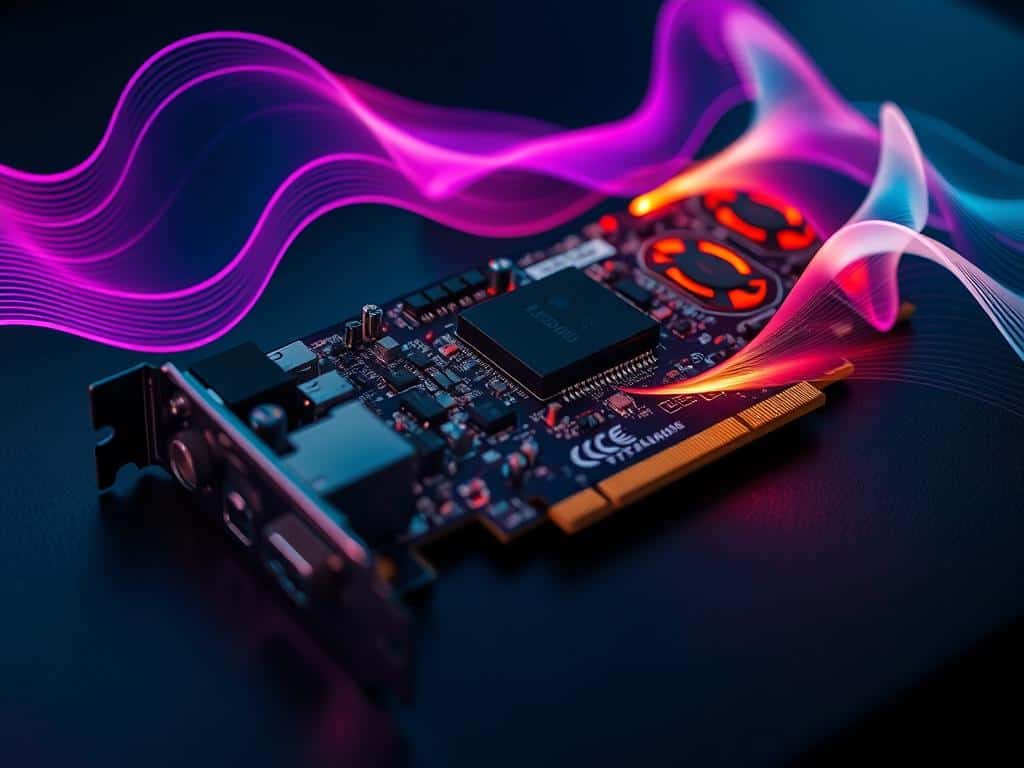
Reduced Audio Interference
Dedicated sound cards also reduce audio interference. Integrated audio solutions can pick up unwanted noise, which can be a problem during demanding tasks. Dedicated sound cards have their own paths, reducing the chance of such noise.
Many users find their listening environment cleaner. They can enjoy audio without background noise. Reports show these cards can cut background noise by up to 50%, improving overall audio quality.
Who Should Consider a Sound Card?
Knowing when you need a sound card can really improve your audio experience. Gamers and audio enthusiasts, as well as musicians and content creators, benefit the most. Each group needs specific features that boost their audio interactions, whether for gaming or music.
Gamers and Enthuasiasts
Gamers get a big advantage from a dedicated sound card. It makes the audio better, making games more immersive. Players can hear sounds that help them in the game.
Good sound cards and audio interfaces make every sound feel real. This is key for gamers who need to react fast. Investing in a good sound card can really help, in games where sound is key.
Musicians and Content Creators
Musicians and content creators need sound cards for top-notch audio. They use them to manage sounds from mics and instruments. This lets them monitor and record with precision.
Sound cards with great preamps and low latency are vital for studio work. They help musicians create great music and content creators make their projects sound better. The right sound card can make a huge difference in audio quality.
Conclusion
Choosing a sound card depends on your audio needs and what you expect. For some, the sound on most motherboards is enough. But for gamers, music makers, or content creators, a dedicated sound card is a big plus.
Looking at the pros and cons, we see that cheaper sound cards like the M-Audio Audiophile 2496 start at $40 used. But, mid-range and top-end cards offer much better sound and features. Prices range from $300 to over $5,000, making it key to pick the right one for quality sound and fast response.
As tech gets better, so does the need for clearer sound and faster processing. Getting a dedicated sound card helps improve my audio experience. It helps me make a smart choice that goes beyond just basic sound.
