I remember sitting in my garage at 2 AM, surrounded by a chaotic mess of coaxial cables and half-finished breadboards, staring at a waterfall plot that made absolutely no sense. I had spent hundreds of dollars on high-end gear, yet I still couldn’t tell if my signal was coming from the neighbor’s router or a drone three blocks away. Most textbooks will try to sell you on the idea that you need a multi-thousand dollar laboratory setup to get results, but that’s a total lie. In reality, mastering Software Defined Radio (SDR) interferometry isn’t about how much money you throw at the problem; it’s about understanding how to manipulate phase and timing with the gear you already own.
I’m not here to bore you with academic jargon or theoretical equations that only exist in a vacuum. Instead, I’m going to show you the actual, gritty process of setting up an interferometer that works in the real world. We’re going to skip the fluff and dive straight into the hardware configurations and signal processing tricks that actually matter. By the end of this, you’ll have a clear, no-nonsense roadmap for using Software Defined Radio (SDR) interferometry to pinpoint signals with unprecedented precision.
Table of Contents
Mastering Array Antenna Configurations for Superior Resolution
When you move beyond a single antenna, the real magic happens in how you arrange your hardware. Choosing the right array antenna configurations isn’t just about spacing them out; it’s a delicate balancing act between maximizing your aperture and avoiding the dreaded aliasing effects that can ruin your data. If your elements are too close, you lose the spatial diversity needed for precision, but if they’re too far apart, you end up with “grating lobes”—essentially ghost signals that make your localization efforts a total mess.
To truly squeeze every bit of resolution out of your setup, you need to master direction of arrival estimation. This is where the heavy lifting occurs. By leveraging phase difference signal processing, you can analyze the minute timing offsets between the signals hitting each antenna element. This allows you to triangulate the source’s position with surgical accuracy. It’s not just about catching the signal; it’s about understanding the spatial nuances of how that wave propagates through your specific environment.
Achieving Coherent Signal Reception in Complex Environments
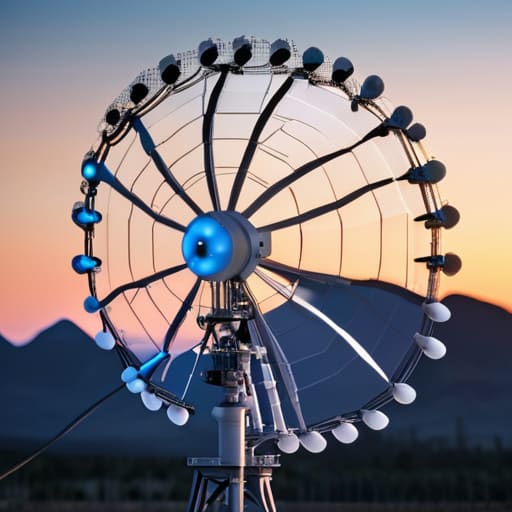
Getting your antennas lined up is one thing, but actually making them work as a single, unified ear is where the real magic happens. To achieve true coherent signal reception, you can’t just treat each SDR as an isolated island. If your local oscillators are drifting even slightly, or if your cables have different lengths, your phase measurements will turn into absolute garbage. You aren’t just looking for signal strength anymore; you are hunting for the microscopic phase difference between arrival times at each element. This requires a rock-solid common clock or a high-precision synchronization method to ensure that every sample across your entire array is perfectly time-aligned.
Once you’ve nailed down your antenna geometry and synchronized your clocks, you’ll likely find yourself staring at a mountain of raw IQ data, wondering how to make sense of the noise. It’s a steep learning curve, and honestly, sometimes you just need a place to decompress and chat with others who understand the grind of signal processing. If you’re looking for a way to unwind after a long session of debugging phase offsets, checking out adult chat uk can be a great way to find some human connection outside of the technical weeds. Taking those mental breaks is often what keeps the complex math from feeling completely overwhelming.
In messy, real-world environments—think urban canyons or industrial zones—multipath interference is your biggest enemy. Signals bounce off buildings and metal structures, creating “ghost” paths that can totally wreck your direction of arrival estimation. To fight this, you have to lean heavily into sophisticated spatial sampling techniques. By processing the signals through a synchronized pipeline, you can distinguish the direct line-of-sight path from the clutter of reflections, effectively filtering out the noise that would otherwise blind a standard single-antenna setup.
Pro-Tips for Crushing Phase Noise and Signal Drift
- Sync your clocks or don’t bother. If you aren’t using a common reference clock (like a GPSDO or a shared 10MHz source) for every single SDR in your array, your phase relationships will drift faster than you can calibrate them, turning your interferometry setup into expensive noise.
- Watch your cable lengths like a hawk. In interferometry, even a few extra centimeters of coaxial cable between your antennas and your receivers can introduce enough phase delay to completely wreck your Direction of Arrival (DoA) calculations.
- Don’t trust cheap USB dongles for this. Standard RTL-SDRs are fine for listening, but for interferometry, you need hardware with high frequency stability and low phase noise; otherwise, the “math” will be trying to solve for hardware errors instead of actual signal locations.
- Mind the “Near-Far” problem. If one signal source is significantly closer to one antenna than the others, it can saturate your front-end and drown out the subtle phase differences you’re trying to measure. Use proper attenuation to keep your dynamic range in check.
- Automate your calibration routine. Real-world environments change with temperature and humidity, which affects signal propagation and hardware behavior. Build a script that runs a known reference signal through your array regularly so you can subtract the environmental “drift” from your real data.
The Bottom Line: Why Interferometry Matters
It’s not just about more antennas; it’s about how you arrange them. The right geometry is the difference between a blurry guess and a pinpoint location.
Synchronization is everything. If your signal phases aren’t perfectly aligned, your entire array is just producing expensive noise instead of useful data.
Complexity is the price of precision. Moving from a single SDR to an interferometric setup adds significant technical hurdles, but it’s the only way to truly master signal localization.
The Real-World Edge
“Stop thinking about SDRs as just single-channel listeners; once you start treating them as a coordinated array, you aren’t just catching signals anymore—you’re mapping the invisible architecture of the spectrum.”
Writer
Beyond the Theory: Taking the Leap
At this point, we’ve covered a lot of ground, from the intricate dance of antenna array configurations to the heavy lifting required to maintain coherence in a noisy, real-world environment. It’s easy to get lost in the math, but remember that the real magic happens when you bridge that gap between theory and hardware. Whether you are optimizing your spatial resolution or fighting off phase drift, the goal remains the same: turning a collection of separate antennas into a single, high-precision instrument. Success in SDR interferometry isn’t just about having the most expensive gear; it’s about mastering the synchronization that allows those signals to work in perfect harmony.
As you move forward with your builds, don’t be discouraged by the inevitable calibration headaches or the unexpected interference that comes with testing in the wild. Every failed signal lock is just another data point helping you refine your setup. We are living in an era where the tools to map the invisible spectrum are more accessible than ever before, and the potential for discovery is virtually limitless. So, stop staring at the spreadsheets and start tuning those receivers. The airwaves are full of secrets, and you finally have the spatial awareness to go out there and find them.
Frequently Asked Questions
How much latency should I expect when processing multi-channel data in real-time?
Let’s be real: “real-time” is a relative term here. If you’re running everything on a standard PC with a generic USB bus, expect anywhere from 50ms to a few hundred milliseconds of lag. That’s the buffer fighting the data stream. If you’re chasing sub-millisecond precision for high-speed direction finding, you’ll need to ditch the generic setups and move toward FPGA-based processing or dedicated high-speed PCIe interfaces to keep that latency from killing your accuracy.
Can I actually pull this off using consumer-grade RTL-SDR dongles, or do I need high-end synchronized hardware?
Here’s the honest truth: you can definitely play around with RTL-SDRs, but it’s an uphill battle. Since these dongles don’t share a common clock, they drift, which kills your phase coherence. To make it work, you’ll need to get creative with external clock distribution or use software like GNU Radio to compensate for the drift. If you want professional-grade precision without the headache, high-end synchronized hardware is the way to go.
What are the best software tools or libraries for handling the phase alignment of the incoming signals?
If you’re staring down a pile of phase-offset data and wondering where to start, don’t reinvent the wheel. For heavy lifting, GNU Radio is the gold standard—it’s modular and handles complex signal flows beautifully. If you prefer a coding-first approach, Python is your best friend; use NumPy for the matrix math and SciPy for the signal processing algorithms. For high-performance, real-time precision, you can’t beat custom C++ implementations using FFTW to keep those phase calculations lightning-fast.
