Did you know that by 2025, workers with AI skills will replace those without? This change will deeply affect the job market. It shows how important AI is in education and the need for new teaching methods.
As we move forward, digital tools will play a big role in learning. Famous educators like Sal Khan want education to be tailored to each student’s needs. This is true at all stages of life.
Today, schools are facing big challenges in using AI in education. There’s a big gap in resources between schools, hurting some students more than others. As we introduce smart classrooms, teachers must focus on skills like creativity and teamwork. These skills will be key in a world where AI handles routine tasks.
Let’s dive into the exciting changes happening in education. We’ll look at how AI is changing the way we learn and what it means for the future.
Key Takeaways
- The shift toward AI competency is reshaping workforce needs.
- Hyperpersonalized education is becoming critical for lifelong learning.
- Technologies like Large Language Model systems enhance learning experiences.
- Integration of AI tools remains a challenge for many educational institutions.
- Critical soft skills will remain essential in an AI-driven world.
The Transformative Role of AI in Education
AI is changing education by making learning more personal for each student. It uses data to find out what each student is good at and what they need to work on. This leads to learning plans that really speak to each student, making them more interested and likely to remember what they learn.
Schools are starting to use these new tools. They’re making education fit different learning styles better. This makes learning more fun and effective for everyone.
Hyperpersonalized Learning Experiences
Learning is becoming more personal, focusing on what each student likes and needs. AI helps make learning plans that fit each student’s unique path. This approach boosts motivation and helps students stay engaged in their learning.
It also helps students learn better and enjoy the process more. This way, learning becomes a lifelong adventure, not just something you do in school.
Self-Directed and Self-Paced Education
AI is making it easier for students to learn at their own pace. It lets them take control of their learning, which boosts their confidence and motivation. Sites like Khan Academy are great examples, providing learning resources anytime, anywhere.
This approach helps students learn at their own speed. They can explore different subjects whenever they want. AI helps them find their way through all the learning materials.
Integration of AI Tools in Classrooms
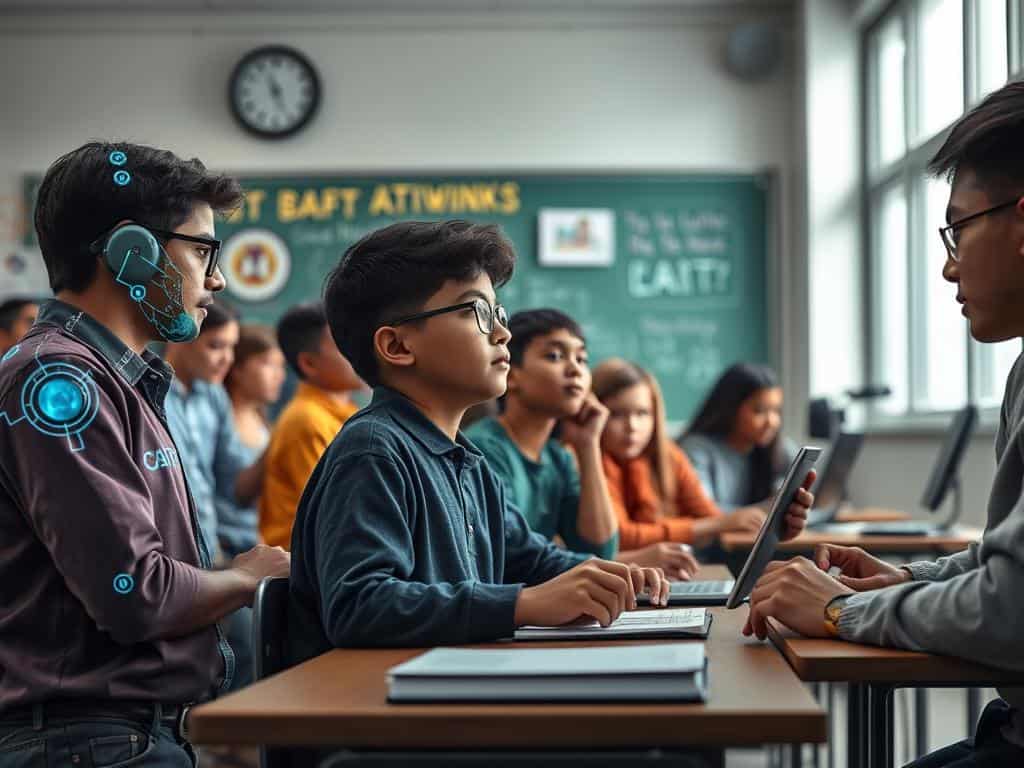
AI is changing how teachers teach in smart classrooms. It helps teachers focus on making learning fun and personal. AI does the boring stuff, like grading, so teachers can do what they do best.
AI also keeps track of how students are doing, giving teachers important feedback. This helps teachers help students better, in real time. It makes learning more collaborative and helps all students, no matter where they are.
AI in Education: Opportunities and Challenges
Exploring AI in education shows both great opportunities and big challenges. AI can help close the gap in education, helping students who face the digital divide. It’s more important than ever to tackle these issues.
Addressing Educational Inequity
AI-driven platforms make education more fair. Kids use smartphones and apps for school, and tools like Duolingo help them learn new languages. This shows AI can help everyone learn.
AI tools like Brainly also help with homework. They give support to students from all backgrounds. This helps everyone get the help they need.
The Role of AI in Personalized Learning
AI changes how we learn, making it more personal. It helps find out what each student is good at and what they need to work on. Tools like Gradescope make grading easier, giving teachers more time to help students.
AI makes lessons fit each student’s learning style. This makes learning more fun and effective. Students get to understand the material better.
Challenges for Educators and Institutions
There are big challenges in using AI in schools. Teachers feel pressure to use new tech without enough training. This can make it hard to use AI well.
There are also worries about keeping student data safe. Schools need to find ways to protect this information. Keeping learning safe online is very important.
Conclusion
Looking ahead to 2025, AI will change education a lot. It can make learning personal and adapt to each student. This lets teachers focus more on helping each student, leading to better results.
AI’s benefits are exciting, but we face big challenges too. We need to make sure everyone can use these new tools. It’s also important to use AI in a way that’s fair and keeps students’ data safe.
By using AI wisely and solving its problems, we can make education better for everyone. This mix of human touch and AI can create learning experiences that really work for all students. It will help them succeed in a world that’s more and more digital.
