Did you know the digital art market is set to hit $12 billion by 2027? This shows how digital art tools have changed the game for artists. I’ve moved from traditional to digital art, and I know the hurdles. The right tools can boost your creativity and make your work shine, making the switch easier.
In this article, I’ll show you the top Digital Art Tools out there. We’ll cover drawing tablets, styluses, and key drawing software. Whether you’re new to graphic design or an experienced artist, these tools will help you reach new heights.
Key Takeaways
- Choosing the right digital art tools can improve creativity and productivity.
- Digital tablets are essential for artists, making sketching and painting better.
- The market for digital art equipment is growing fast.
- Understanding digital art’s benefits makes switching from traditional art easier.
- Quality drawing software improves your workflow and art quality.
Understanding the Importance of Digital Art Tools
Switching from traditional art to digital can be a big step for artists. I started with 40 years of traditional art and then moved to digital tools 15 years ago. This change opened up new creative paths but also brought new challenges.
Transitioning from Traditional to Digital
At first, using digital art tools felt overwhelming. I had to trade my brushes and paints for software. My first digital tool was an Intuos tablet, which was basic compared to today’s options.
But as I got into more advanced programs, I saw the power of digital tools. They let me edit quickly and add cool effects. Now, tools like clip studio paint make it easy to rotate and adjust my art.
Benefits of Digital Mediums for Artists
Digital art offers many advantages. It saves money because digital files are smaller and easier to share. Programs like Procreate automatically save your work, so you don’t worry about losing it.
Digital tools make creating art faster and more creative. But it’s important to keep learning traditional art too. This way, artists can use both digital and traditional skills to their advantage.
The Best Digital Art Tools
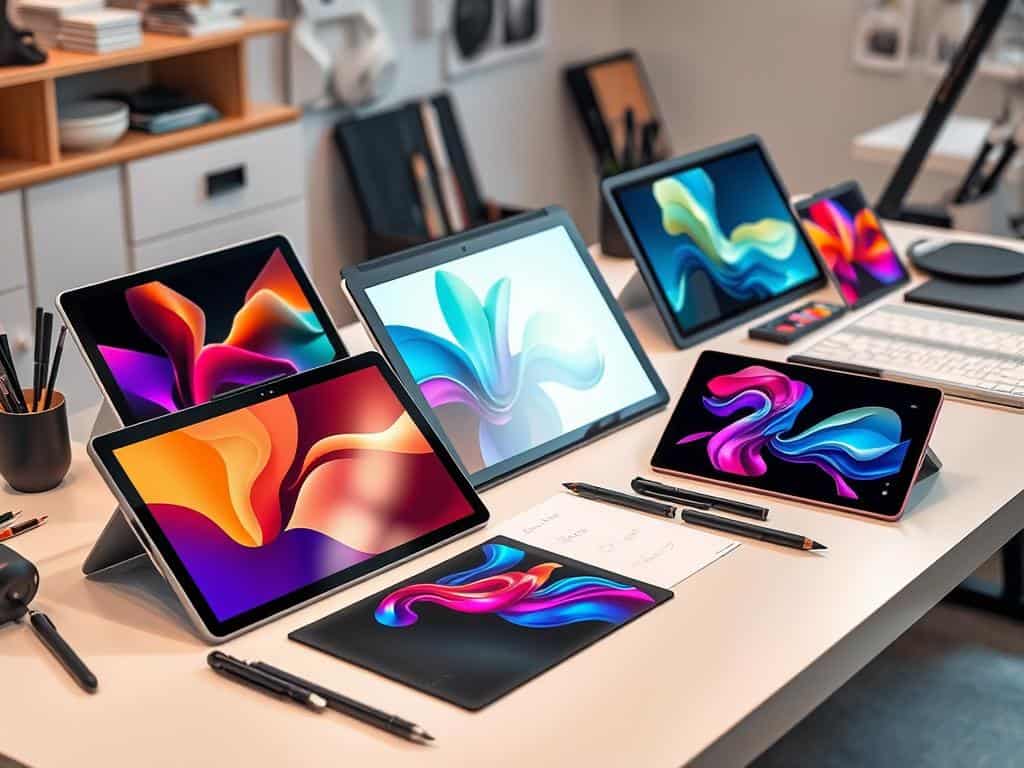
The right digital art tools can really change how we create. Drawing tablets and styluses offer precise control, fitting all skill levels. Knowing these tools can boost my digital art and make my workflow smoother.
Top Drawing Tablets for Every Level
Drawing tablets are key for digital artists. Beginners can start with the VEIKK Creator A30, which is affordable and customizable. For those who need more, the Wacom Cintiq Pro has a vibrant HD display and lots of features.
Stylus Recommendations for Precise Control
A good stylus is vital for digital art. The Apple Pencil is my favorite because it works great with the iPad. Wacom and Adonit also offer great styluses for different devices and budgets.
Essential Drawing Software Options
Good software is needed to get the most out of drawing tablets and styluses. Adobe Photoshop is a top choice, with AI tools that make tasks easier. GIMP is a strong open-source option, but it can be hard to learn.
Corel Painter and Paintstorm Studio have unique features for different artists. ArtRage works on many devices, making it versatile. The right software can unlock my creativity and make my work more efficient.
Digital Art Tools for Efficiency and Workflow
Exploring digital art tools shows that the right accessories can boost creativity. With the right gear, I can work more efficiently and enjoy my art more.
Accessories to Enhance Your Digital Art Experience
Tools like the Mobile Pixels Duex Plus portable monitor are game-changers. They let me work better on the move. The Paperlike screen protector makes my tablet feel like paper, improving my Apple Pencil use.
These advancements in art tech make creating more natural and fun.
Creative Asset Libraries to Speed Up Your Projects
Creative asset libraries are goldmines for artists. They offer a vast array of resources to speed up projects. Sites like Envato Elements have millions of assets, including brushes and templates.
Using these assets, I can dive deeper into my art without getting bogged down. This boosts my creativity and productivity, letting me share my work faster.
Conclusion
Exploring digital art tools has opened up new ways to express creativity and innovate. I’ve found that art technology can improve my workflow and offer creative solutions not seen in traditional mediums. With digital tools becoming more accessible and affordable, graphic design is changing fast.
This change is attracting a new wave of artists to share their work online. Over 69% of traditional artists are now using digital tools, showing a big shift in how art is made. Platforms like Instagram and Pinterest are buzzing with digital art, with 1 billion users each month.
The digital art market is growing, and AI and machine learning are set to change artistic production. This makes creating art more efficient than ever. Reflecting on using these digital tools, I see my creative possibilities have grown. I’m excited to try new techniques and keep my passion for art alive.
Embracing these changes in art technology lets me be more creative and connect with my audience in new ways. It ensures my work stays relevant in a world that’s always changing.
