Did you know that by 2025, the number of active IoT devices will hit over 75 billion worldwide? This huge increase in the Internet of Things (IoT) is changing our lives and work. It connects everyday objects to the internet, letting them share important data.
The idea of IoT started with Kevin Ashton in 1999. It has grown much bigger than expected. Today, IoT is a key driver of innovation in fields like healthcare, manufacturing, transportation, and agriculture.
In this article, I’ll explore how IoT changes our daily lives with smart devices and automation. It shows how IoT can transform industries and make things more efficient. With 5G, artificial intelligence, and edge computing, IoT systems will get even better. This will lead to smarter solutions and better decision-making.
Key Takeaways
- The IoT is projected to encompass over 75 billion devices by 2025.
- Smart devices enhance connectivity, streamlining daily tasks in homes and businesses.
- Industries leveraging IoT report improved operational efficiency and reduced costs.
- AI integration in IoT systems helps in real-time data analysis, driving informed decisions.
- 5G networks are critical for the quick and efficient use of IoT devices.
Understanding the IoT (Internet of Things)
The Internet of Things (IoT) has changed how we interact with our surroundings. It’s a network of devices that talk to each other and share data online. This includes things like appliances, cars, and machines in factories.
This technology makes our lives easier and opens up new possibilities in many fields.
Definition and Overview
The IoT is all about devices that collect and share data. This is key in smart homes, where gadgets work on their own or with our help. It makes our homes more comfortable and efficient.
The IoT market is growing fast, reaching USD 384.5 billion in 2022. It’s expected to grow even more, showing how much people want IoT solutions. These solutions help businesses change how they work and get better at it.
Key Components of IoT
To understand the IoT, we need to know its parts. Here are the main ones:
- Sensors/Endpoints: These collect data like temperature and movement.
- Connectivity Layer: Wi-Fi, Bluetooth, and Li-Fi help devices talk to each other.
- Compute Engine: Cloud services process data, using machine learning to help us make decisions.
- Security Layer: It keeps data safe with encryption and access control.
- User Interface: Apps make it easy for us to use our connected devices.
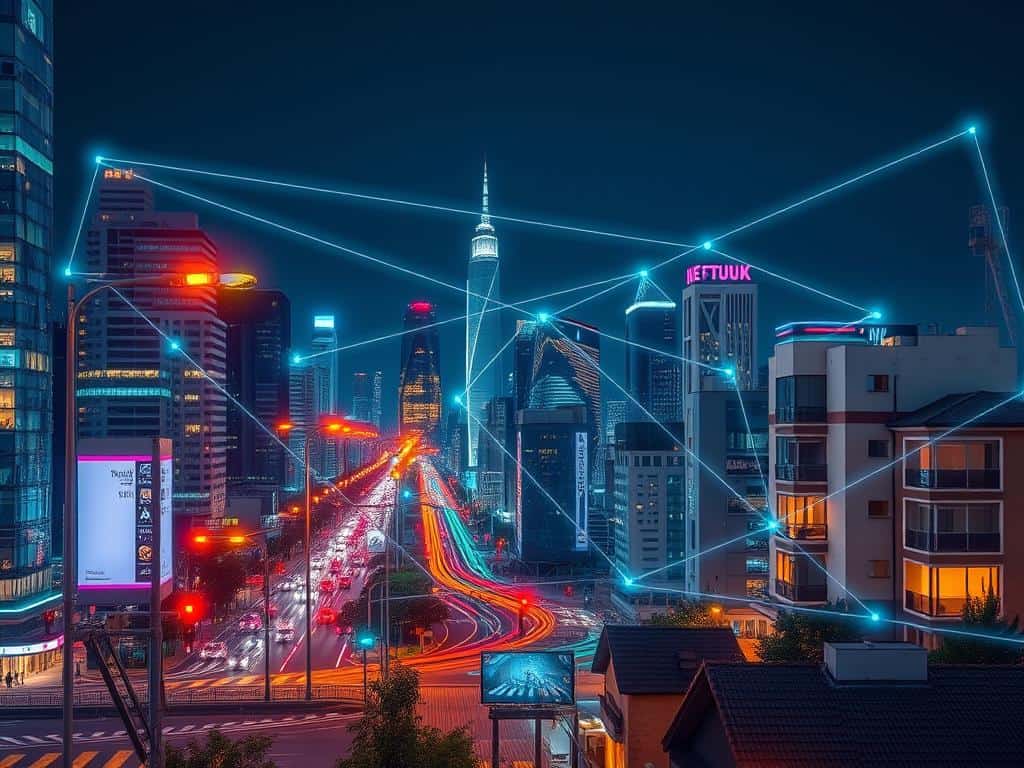
This system of parts helps many areas, like making things smarter and improving health care. As we keep using it, we see how it’s changing our lives and work.
Impact of IoT on Daily Life and Industries
The Internet of Things (IoT) has changed our lives and industries. It makes things more convenient, efficient, and engaging. Smart devices are key in home automation, giving us more control over our homes.
For example, smart thermostats learn our preferences and save energy. This means we stay comfortable while saving money.
Smart Devices and Home Automation
Smart devices have transformed home automation. They make our homes more comfortable and secure. With smart bulbs, we can control the lights from anywhere, adjusting brightness as needed.
The smart home market is growing fast. It’s expected to hit around $174 billion by 2025. This growth shows how IoT is changing our homes for the better.
Applications Across Different Sectors
IoT is used in many areas, showing its wide range of benefits. In transportation, IoT helps save a lot of money by improving fleet management. Smart cities use IoT to manage traffic better, cutting down on jams and pollution.
In healthcare, IoT helps monitor patients remotely. This improves care and saves money. In manufacturing, IoT boosts productivity by predicting when equipment needs maintenance and monitoring it in real-time.
Enhancing Connectivity
IoT makes industries more connected by linking different devices and systems. This leads to better data sharing and communication. Machine-to-machine communication makes operations smoother and encourages new ideas.
With 5G networks, IoT can support even more devices. This opens up new possibilities for businesses, thanks to cloud-based analytics and quick decision-making.
Conclusion
The Internet of Things (IoT) is more than just a trend. It’s a big change that’s changing how we use technology and interact with each other. This article has shown how the IoT future will bring us smarter technology and better living spaces.
Right now, 871 million smart home devices have been sold worldwide. By 2027, this number is expected to hit 1.23 billion. This shows how much we rely on connected devices in our daily lives.
The IoT is making a big impact in many areas. About 80% of big companies are using IoT in their work. As more devices are used, we’ll see even more data. This data can help us understand our daily lives better, like how active we are or how much energy we use.
But, we also need to think about privacy and security. Many people worry about how their personal info is used with IoT data.
Looking to the future, there are many chances for new ideas and better work through IoT. We can get better health monitoring and save energy with smart technology. But, we must be careful with how we use and share data. We need to make sure our move towards a smarter world is fair and safe for everyone.
