Did you know 77% of people think technology makes them more efficient? Smart homes are changing how we live, making our lives easier and safer. This guide will help you start your smart home journey, even if you’re not tech-savvy.
Building a smart home brings many benefits. You’ll save time, feel more comfortable, and be safer. With devices like smart speakers and security systems, you can control your home in new ways. This guide will prepare you for this exciting adventure.
Key Takeaways
- Smart Homes for Beginners can significantly enhance efficiency and comfort.
- The market for smart homes is rapidly growing, projected to reach almost 85 million users by 2026.
- Simple and affordable smart devices are essential for effective home automation.
- Building a smart home provides improved security and peace of mind.
- Understanding your ecosystem choices is critical for a successful smart home setup.
- Smart technology can create significant improvements in everyday living.
Understanding the Basics of Smart Homes for Beginners
Smart homes mix technology and convenience in a cool way. They make daily tasks easier. For example, you can change lights or the thermostat with just your voice.
This isn’t just fun; it changes how we live. It makes our homes more interactive and useful.
The Allure of Home Automation
Voice assistants make smart homes even better. Say “Alexa, turn on the living room lights,” and see how fast it works. Home automation isn’t just about being easy to use.
It also saves energy, which can cut down on bills. Using smart thermostats can save up to 30% on energy. Many people see it as a way to save money and live better.
Benefits of Building a Smart Home
Smart homes offer many perks. Better security is a big one, with over 60% of users feeling safer with smart locks and cameras. You can also control devices from anywhere or set schedules.
Smart plugs turn regular appliances into smart ones. This lets you control everything from coffee makers to lamps.
Choosing the Right Ecosystem
Picking the right smart home system is key. Google Home, Amazon Alexa, and Apple HomeKit are the top choices. Amazon Alexa is great for beginners because it works with lots of products.
Knowing the tech behind smart homes helps too. About 70% of devices use the 2.4 GHz frequency. This info helps you choose the right setup.
Getting Started: Essential Devices for Your Smart Home
Building my first smart home needed careful planning. I chose essential devices to start with. This sets the stage for a smooth and efficient smart home.
Smart Speakers as Control Centers
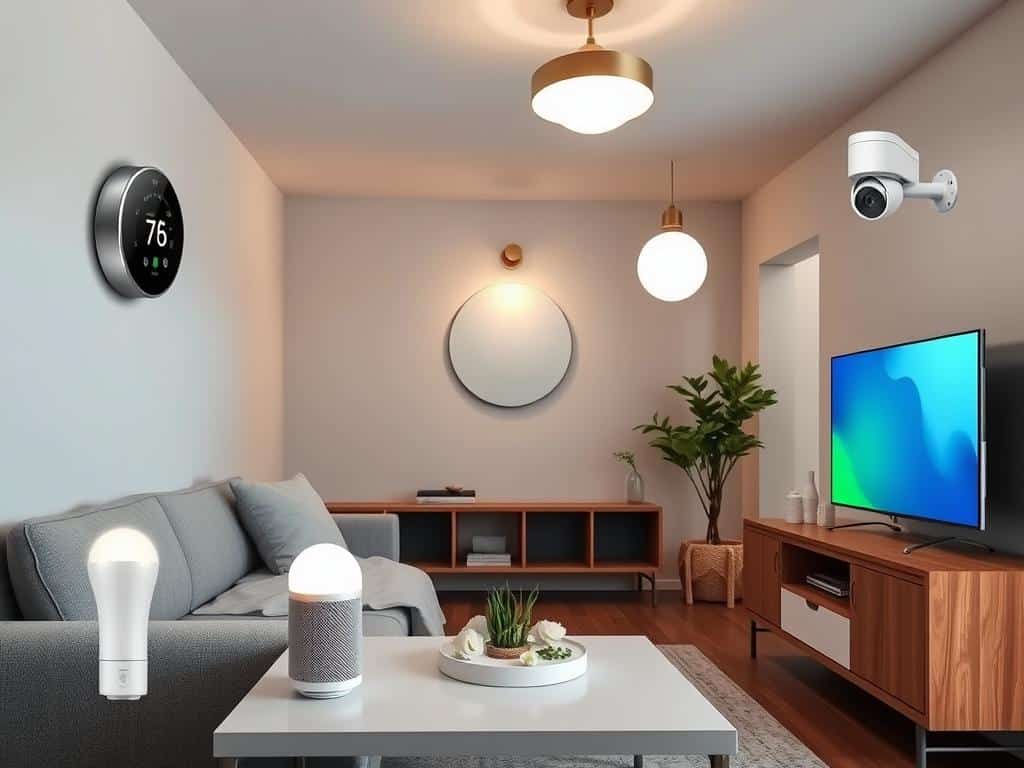
Smart speakers are key to controlling my smart home. They let me use voice commands to manage devices. I picked an Amazon Echo for its wide compatibility, including smart plugs and door locks.
Google Home also caught my eye. It supports over 1,000 smart devices from more than 150 brands. Both are great for a connected home.
Smart Lights: Brighten Up Your Space
Smart lighting changed how I use my space. I can adjust brightness and colors to save energy and set the mood. Smart lighting is a big hit, making up 45% of smart home sales in 2022.
Being able to change settings with apps or voice commands is super convenient. It makes sure my lighting is just right whenever I need it.
Thermostats and Smart Home Comfort
The smart thermostat is a game-changer. It adjusts temperature based on my schedule, saving energy. The smart thermostat market is expected to grow 15% each year from 2023 to 2028.
It makes my home more comfortable and helps cut down on energy bills. It’s a smart investment.
Enhancing Security with Smart Locks and Cameras
To make my home safer, I added smart locks and cameras. I can check on my home from anywhere, which is reassuring. Security cameras are very popular, growing 20% each year.
Being able to lock and unlock doors with my phone is really convenient. It fits perfectly with my busy lifestyle, giving me control and peace of mind.
Conclusion
Starting my journey to a smart home has been eye-opening and rewarding. I’ve learned what makes a home smart and the key devices that work well together. Choosing the right smart home setup can really improve my life.
The benefits of a smart home are clear. Things like saving energy with smart thermostats and lights, and better security with new monitoring systems, are huge. But, setting up a smart home needs careful planning and thinking about your budget and what works together. Knowing the costs, from under $100 for some devices to over $15,000 for full systems, helps me make smart choices.
Now, I’m ready to move forward with my smart home setup. With the right devices and a good plan, I expect a more convenient and efficient home. Smart home technology is an exciting step that can make my home and daily life better.
