Did you know that basic computer speakers or small soundbars can cost between $40 to $200? Yet, a high-quality desktop audio system can greatly improve your sound experience. Many prefer headphones for their convenience, but they miss out on the wide soundstage speakers offer.
A top-notch setup, like the Q Acoustics M20 HD active speaker system for $499, gives you true lossless audio. It also brings the feel of sound pressure waves, making your audio more immersive.
Most desktops aren’t ideal for great sound. But, with the right components and speaker placement, you can have an amazing audio experience at your desk. In this guide, I’ll show you how to turn your desktop into a high-fidelity powerhouse.
Key Takeaways
- Expertly chosen desktop speakers can significantly enhance sound quality compared to basic options.
- High-fidelity audio systems invest more in audio quality, providing a better listening experience over time.
- Speaker placement is key to avoid common acoustic problems in desktop setups.
- Bluetooth-enabled amplifiers like the Audioengine N22 offer modern features without sacrificing sound quality.
- Knowing the difference between passive and active speakers helps make better choices.
The Importance of a Quality Desktop Audio System
A high-quality desktop audio system greatly improves your audio experience. Moving from low-quality speakers to better ones makes a big difference. You’ll enjoy better sound while gaming, watching movies, or listening to music.
Desktop speakers are small but pack a big punch. They’re designed to bring rich, clear sounds right to your desk.
Enhancing Your Audio Experience
Desktop speakers have big advantages for sound quality. They combine internal and external parts, unlike traditional stereo systems. This means you get both parts in one.
They often have big woofers and small tweeters for better sound depth and clarity. With features like HDMI ARC, Bluetooth, and RCA, connecting different audio sources is easy. This makes your audio experience even better.
Why Speakers are Better than Headphones
Speakers offer a level of immersion that headphones can’t match. They spread sound around you, unlike headphones that keep it close. This makes listening more enjoyable, whether you’re gaming or watching a movie.
Speakers also make listening less tiring over time. They’re a better choice for long listening sessions.
Overcoming Acoustic Challenges in Desktop Environments
Desktops can have sound problems, like echoes and sound bending around objects. To fix these, you need to know how to place your speakers right. Adjusting their position and your setup is key to better sound in small spaces.
Essential Components for Your Desktop Speaker Setup
Building a great desktop audio system starts with picking the right parts. It’s key to know the difference between passive and active speakers. Each type has its own benefits, depending on what you need and like.
Choosing Passive vs. Active Speakers
Passive speakers need a separate amp, which makes it easy to upgrade later. The Insignia NS-B2111 bookshelf speakers are a good example. They have a wide frequency range and can handle up to 120 watts at 8 ohms.
Active speakers, like the Q Acoustics M20 HD, have built-in amps. This makes setup simpler and cuts down on clutter. Your choice affects how your music sounds, shaping your audio experience.
Amplifiers and Connectivity Options
Finding the right desktop amp is key for great sound. The Fosi Audio BT20A, with 100W RMS x 2, is perfect for small spaces. It boosts your passive speakers’ sound, ensuring strong performance.
When connecting your speakers, you can use USB or AUX. USB is best because it skips your computer’s audio processing, giving you better sound.
Understanding Your Sound Preferences
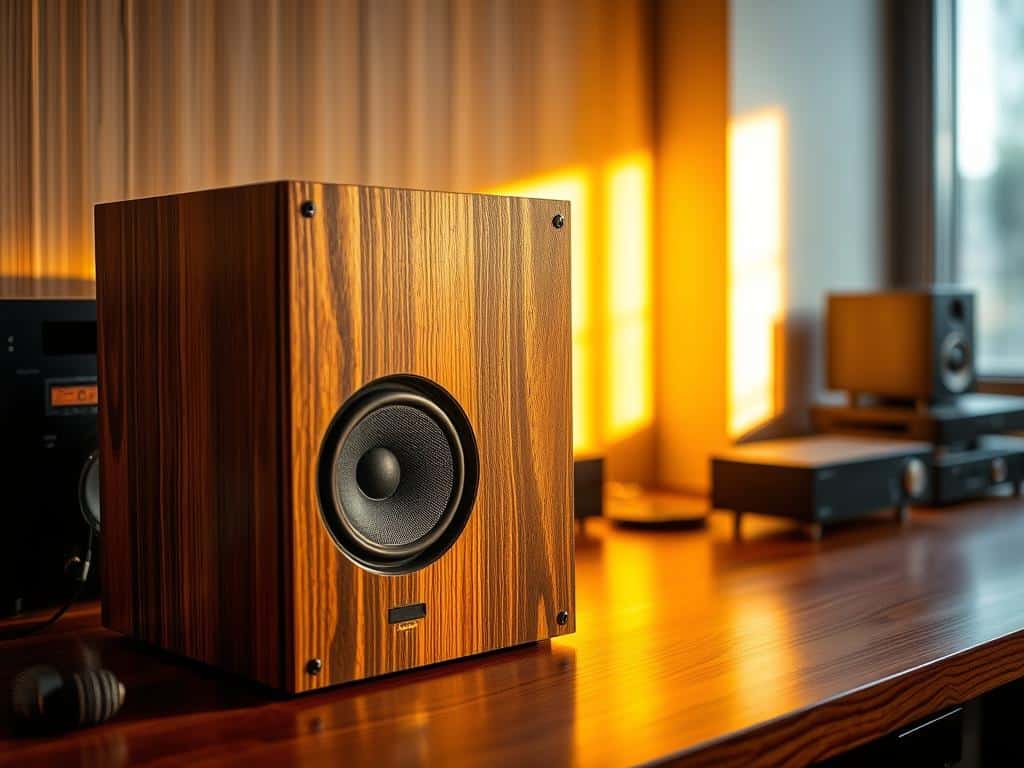
Your personal taste in sound is important for your desktop audio setup. If you love deep bass, a powered subwoofer can add $100 or more to your setup. It makes a big difference in how you hear music.
Setting up your speakers in an equilateral triangle also improves sound quality. Tailoring your audio setup to your preferences is essential for the perfect desktop sound.
Speaker Placement and Acoustic Treatment
Finding the right spot for speakers is key to great sound. Bad placement can make the sound muddy. But, the right spot can make it clear and deep.
I suggest keeping the listening area at least 10 feet from the back wall. This helps avoid sound reflections. The “38% rule” is also helpful. It says to place the listening area at 38% of the room’s length from the wall for the best sound.
Optimizing Speaker Placement for Best Audio Quality
The way speakers and listeners are set up is very important. I aim for an equilateral triangle between speakers and the listener. This setup helps with stereo imaging.
To get good bass, avoid certain spots in the room. Also, studio monitors should be at least 47 inches high. This lets the tweeters hit my ears just right.
Using Acoustic Absorption Techniques
Acoustic absorption can really improve sound quality. Placing acoustic panels at key spots can cut down on echoes. Heavy fabrics around the room also help with sound clarity.
Bass traps are key, placed where two long walls meet. They help manage low sounds and make the audio better overall.
The Role of Soundproofing in Your Setup
Soundproofing is essential for a great audio setup. It keeps out external noise, making the sound more immersive. A treated room reduces outside sounds that can ruin the listening experience.
By using soundproofing, I can keep the music and mood pure. It creates the perfect setting for enjoying my audio system.
Conclusion
Creating the perfect desktop audio system is more than just buying good speakers. It’s about choosing the right parts, where to put them, and solving sound problems. I’ve learned that great sound quality makes gaming, music, and movies better.
Choosing between passive and active speakers is key. Knowing what sound I like helps me set up my system just right. This way, it meets my needs perfectly.
Where you place your speakers is also very important. Elevating them helps sound spread out better. Using acoustic treatment, like absorption panels, is also vital. It cuts down on echoes and reflections, making every sound clear.
In short, making my desktop audio system the best is all about paying attention to every detail. It turns my listening space into a sound paradise. The effort I put in will make every sound experience better and more real.
