Did you know that AI-powered virtual assistants save users an average of 30 minutes per day by streamlining routine tasks like scheduling and reminders? This shows the big impact AI has made in our daily lives by 2025. AI has become a big part of our routines, making things like communication and healthcare better.
By 2025, we see a big change. Intelligent machines are now helping us work better together. They’re not just in our devices anymore. They’re our partners in making our work more efficient.
AI that uses text, audio, and visuals is also changing how we interact. It makes our interactions more fun and efficient. As AI keeps getting better, it’s important for us to learn how to use it to our advantage.
Key Takeaways
- AI-powered assistants help recover 30 minutes daily for users.
- Transformative power of AI leads to significant productivity gains.
- Personalized recommendations improve user satisfaction dramatically.
- AI technologies increasingly integrated into various aspects of life.
- Advancements in AI 2025 include intelligent collaborations and more.
Transforming Daily Routines through AI
AI has changed how we do daily tasks. It boosts productivity and makes things more personal. These changes are big in how we interact with everyday chores.
Streamlining Routine Tasks
Smart assistants are key in handling daily tasks. They use machine learning and voice recognition to help with things like scheduling and reminders. This makes tasks easier and gives us more time for creative thinking.
AI also looks at lots of data to make our work better. It makes simple tasks feel easy.
Personalizing Recommendations
AI makes recommendations just for you. It’s great for finding movies or shopping online. For example, Netflix and Amazon use AI to suggest things you might like.
This makes your experience better and keeps you coming back. It’s a win-win for both you and the brands.
Enhancing Communication
AI has made talking to others more efficient. AI chatbots help with questions and support anytime. At work, AI sorts emails, saving us time.
It also helps with language translation. This helps us connect with people from all over, making our relationships stronger.
AI in Everyday Life: The Rise of Smart Assistants and Gadgets
Smart assistants and AI gadgets are changing our homes. They make our lives better and more enjoyable. These tools are getting smarter, making our interactions more meaningful.
The Evolution of Smart Assistants
Smart assistants have come a long way. They used to just do simple tasks. Now, they can understand and respond like never before.
For me, talking to my assistant is like having a real conversation. It feels like they really get me. With more and more people getting smart speakers, it’s clear they’re here to stay.
AI Gadgets in Home Automation
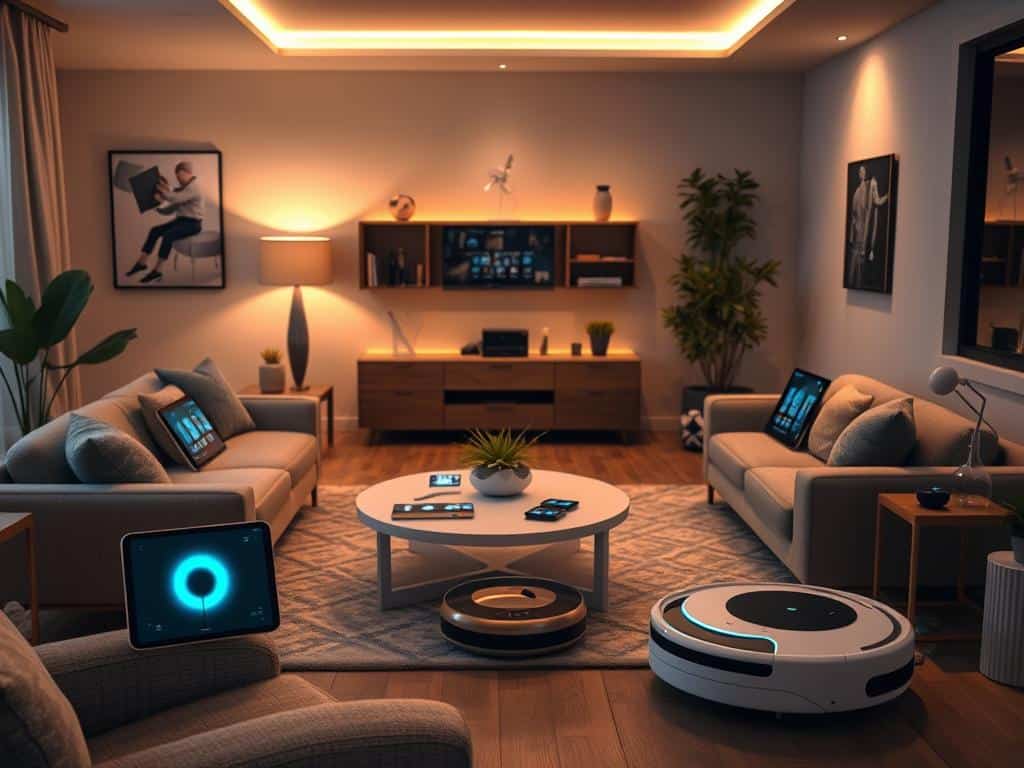
AI gadgets are making our homes smarter. They control things like lights, temperature, and security. Voice-activated devices are growing fast, making our lives easier.
I can adjust my home settings with just my voice. This saves energy and makes my home more comfortable. By 2025, the smart home market is expected to hit $175 billion. AI is making a big difference in our homes.
Innovative Applications of AI in Healthcare
AI in healthcare is changing fast, bringing new ways to care for patients and make medical work more efficient. These new technologies are reshaping how we get healthcare, meeting big needs and making things better for everyone.
Remote Medicine and Telehealth Services
Telehealth services are changing how we get medical help. Now, patients can talk to doctors from anywhere, not just in person. This makes getting care easier and gets more people involved in their health.
AI is also helping cut down on costs by making things more automatic. This means telehealth is getting better, helping both doctors and patients on their health journeys.
Wearable AI Devices
Wearable AI devices are key for keeping an eye on health. They collect data all the time, giving users insights into their health. This helps spot problems early, before they get worse.
For example, devices like the Apple Watch help people stay on top of their health. They make it easier to take care of oneself, leading to better health overall.
AI-Powered Diagnostics and Patient Care
AI is making a big difference in diagnosing and treating patients. Tools like IBM Watson for Oncology give doctors personalized advice based on lots of data. This helps make treatment plans better.
Platforms like Aidoc also help by quickly spotting urgent health issues in images. This means doctors can focus on the most important cases first. AI makes healthcare faster and more accurate, giving patients the care they need.
Conclusion
Looking at AI in Everyday Life, we see big changes by 2025. Voice assistants like Siri and Alexa are in over 65% of U.S. homes. They help us make 35% of our purchases on Amazon and Netflix.
The future of AI is exciting, with new uses in healthcare and home automation. AI chatbots will handle 85% of customer service by 2025. They also help filter out 99% of spam emails.
AI is set to change jobs, automating up to 30% of tasks. This means we’ll need to adapt and use AI to its full extent. By doing so, we can make our lives better, stay healthy, and look forward to a more efficient future.
