I remember the first time I tried my hand at polymer clay jewelry making. It was a disaster. My workspace looked like a toddler had gone rogue with a box of crayons, and the clay? More like a stubborn lump of dough refusing to cooperate. I’d watched a dozen tutorials, each promising simplicity, but there I was, elbow-deep in rainbow chaos, questioning every life decision that led me to this moment. If you’ve ever been seduced by the allure of creating tiny, wearable art, only to find yourself in a similar mess, welcome to the club.
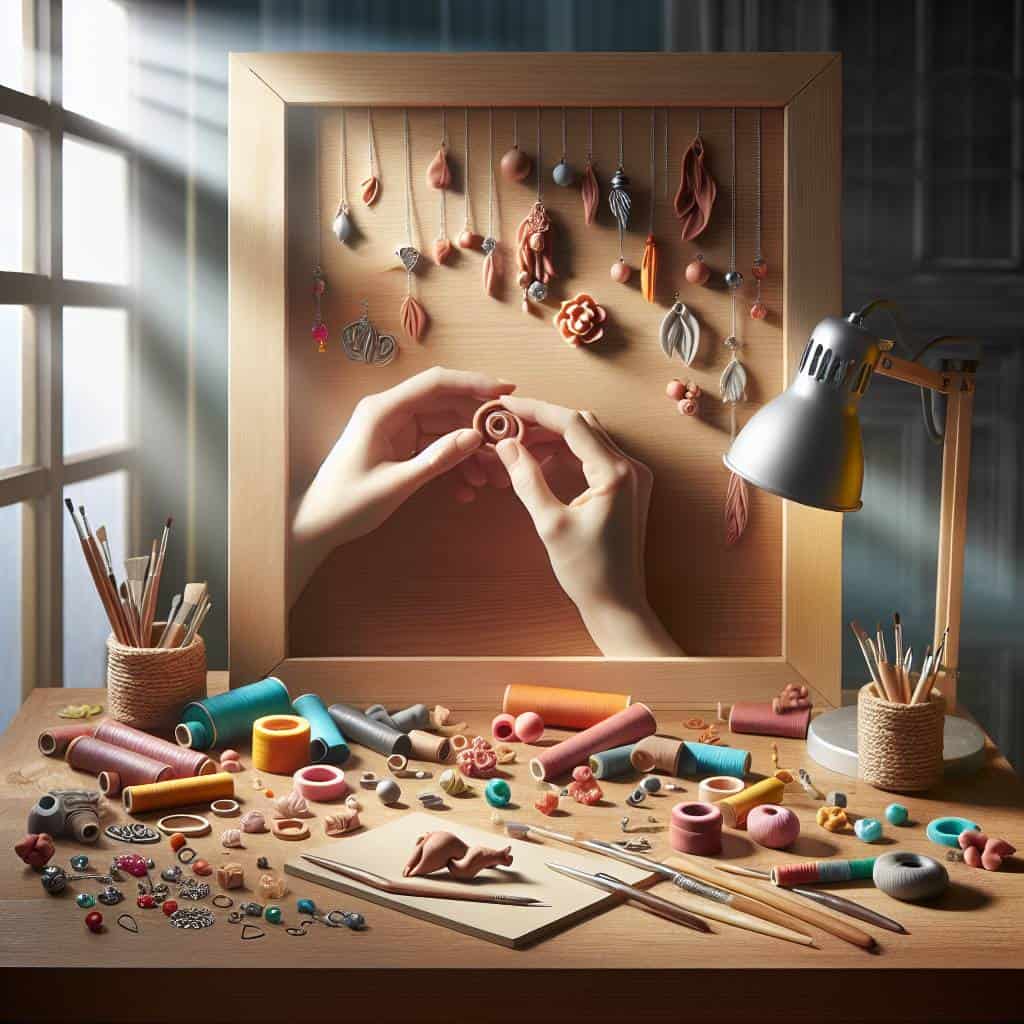
But here’s the deal: I’m not leaving you to flounder in clay purgatory like I did. This article will be your roadmap through the chaos—no fluff, just the solid stuff you need. We’re diving into the gritty details of conditioning clay, the essential tools that won’t break the bank, and the secrets of baking without burning your dreams to a crisp. By the end, you’ll be ready to finish your pieces like a pro. Let’s roll up our sleeves and get to work.
Table of Contents
- The Art of Not Gluing Your Fingers Together: A Beginner’s Guide to Polymer Clay Jewelry
- Why My Clay Pieces Look Like Abstract Art (And That’s Okay)
- Mastering the Oven: Baking Without Burning Down the House
- Wrangling Clay: A No-Nonsense Guide to Kicking Off Your Polymer Jewelry Adventure
- Navigating the Polymer Clay Jungle: A Reality Check
- The Art of Controlled Chaos
- Your Polymer Clay Queries: Cracked, Baked, and Glazed
- The Final Spin of the Wheel
The Art of Not Gluing Your Fingers Together: A Beginner’s Guide to Polymer Clay Jewelry
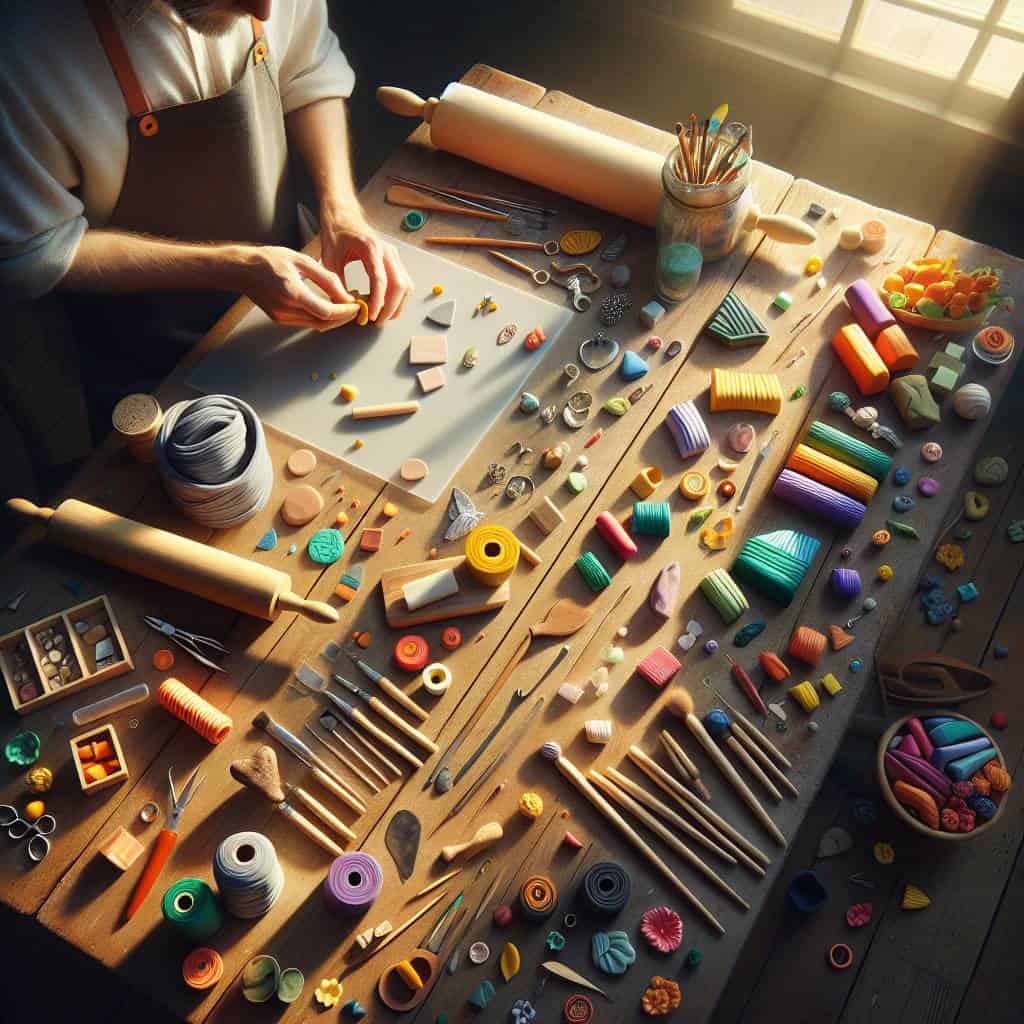
Diving into the world of polymer clay jewelry is a bit like stepping into a workshop with a box of mismatched parts and a vague idea of what you want to build. It’s chaotic, unpredictable, and, frankly, you’re bound to make a mess. But, trust me, that’s part of the charm. Now, the first thing you’ve got to get your hands on is the clay itself—literally. Conditioning the clay is essential. Think of it like loosening up the bolts on a rusty old engine. You knead it, roll it, and basically work it until it’s pliable, because unless you’re into making brittle, crumbly pieces that shatter with a sneeze, this step is non-negotiable.
Once you’ve got your clay ready, it’s time to talk tools. You don’t need anything fancy, just some basic gear to start shaping those colorful lumps into tiny masterpieces. A decent blade, maybe a roller, and if you’re feeling adventurous, some texture stamps. The key is experimentation—cut, press, mold. Let your inner mechanic take the wheel and tinker away. Remember, imperfections add character. Now, baking is where the real magic—or disaster—happens. Follow the instructions, keep an eye on the time and temperature like a hawk because otherwise, you might end up with a batch of burnt offerings instead of jewelry.
Finally, there’s the finishing line, literally. Sanding, buffing, and sealing your pieces is like giving your car that final polish. It’s the difference between something that looks homemade and something that looks handcrafted. Take your time here. Don’t rush it. Each piece you finish is a testament to your journey from clueless beginner to a slightly less clueless beginner who didn’t glue their fingers together. In the end, it’s about learning, experimenting, and maybe, just maybe, creating something beautiful along the way.
Why My Clay Pieces Look Like Abstract Art (And That’s Okay)
Let’s be real. When I first started molding polymer clay, I wasn’t crafting little masterpieces. My creations looked more like something from an avant-garde art gallery. You know, the kind of stuff that makes people squint their eyes and say, “Interesting…” while they try to find the right angle to make sense of it. But here’s the truth: that’s perfectly fine. In fact, it’s more than fine—it’s liberating. You see, working with clay is about exploration, not perfection. It’s like opening up your toolbox and realizing you’ve got a whole new set of tools you never knew existed. Each blob, swirl, and asymmetrical shape is a testament to experimentation, a tangible mark of the learning curve. And let’s not forget, abstract art is all about capturing emotion and movement. So, if my pieces look like a snapshot of chaos, they’re doing their job.
Alright, so you’re diving headfirst into the world of polymer clay jewelry making, where each piece is a testament to your patience and creativity. But let’s not kid ourselves, this endeavor can sometimes feel like navigating a maze blindfolded. You know what else feels that way? Trying to meet new people in a world that’s gone digital. If you need a break from crafting and want to chat with local ladies who have their own creative pursuits, check out Geile Weiber. It’s Germany’s most interesting adult chatting platform, and who knows, maybe you’ll find some inspiration for your next jewelry piece while connecting with someone new. Consider it a creative detour that might just add a little extra sparkle to your day.
Besides, who decided jewelry had to fit a mold anyway? Sure, there’s beauty in symmetry and order, but there’s also beauty in the unexpected. Think about it: engines don’t always run smoothly, and sometimes the best fixes come from the quirkiest solutions. So why should clay be any different? When I see a piece that’s not quite what I intended, I don’t see failure—I see potential. Each misshapen bead or lopsided pendant is an opportunity to break away from the norm and create something uniquely mine. It’s like finding a new route on a familiar drive. So, if my clay pieces end up looking like abstract art, it’s not just okay—it’s a whole new way of seeing the world, one that’s just as valid as any other.
Mastering the Oven: Baking Without Burning Down the House
Alright, so you’re ready to bake your polymer clay masterpiece without turning your kitchen into a scene from a disaster movie. First off, let’s talk temperature. Think of your oven like an old truck that’s been around the block a few times—temperamental and in need of a gentle touch. Most clay instructions will tell you to bake at a certain temperature, but here’s the gritty truth: ovens lie. Get yourself an oven thermometer. It’s non-negotiable. This little device will save you from a smoky, charred fiasco. Trust me, nothing kills the joy of crafting faster than the smell of burnt plastic.
Now, timing is your next hurdle. Put simply, you can’t rush art. Underbake, and your pieces might as well still be in the package. Overbake, and you’ve got a brittle mess. It’s like balancing a wrench on the edge of a workbench—precision is key. Start with the shortest recommended time, then check your pieces. They should be firm but still slightly flexible. If they’re not quite there, give them a bit more time. But always keep an eye on them, like a hawk eyeing its prey. This isn’t about walking away and hoping for the best. Stay vigilant, and you’ll come out with jewelry that’s as solid as a well-tuned engine.
Wrangling Clay: A No-Nonsense Guide to Kicking Off Your Polymer Jewelry Adventure
- Conditioning clay isn’t just a step; it’s a wrestling match with stubborn dough—skip it, and your pieces will crack faster than a cheap wrench.
- Invest in solid tools—a good blade, some sculpting tools, and an unyielding work surface are your new best friends in this bumpy ride.
- Baking polymer clay is not about guesswork; it’s a science. Get a dedicated oven thermometer or risk creating a batch of miniature disasters.
- Finishing touches are where the magic happens, so sand, buff, and polish your pieces until they shine like a chrome bumper on a classic car.
- Experiment with your pieces; don’t follow the herd. Create something that speaks to you, even if it looks like a psychedelic explosion at first.
Navigating the Polymer Clay Jungle: A Reality Check
Conditioning clay is like wrestling with a stubborn dough ball. You’re not just softening it; you’re making sure your jewelry won’t crack like dry earth. Roll it, knead it, and don’t stop until it’s as smooth as a baby’s cheek.
Tools matter, but don’t let the fancy ones seduce you. Start simple—a blade, a roller, and maybe a few textures. It’s not the tool that makes the craft, it’s how you wield it.
Baking is where dreams meet reality. A tiny misstep and your masterpiece turns into a charred disaster. Get an oven thermometer and trust it more than you trust the oven’s dial. Timing? It’s everything.
The Art of Controlled Chaos
Diving into polymer clay jewelry is like taming a wild beast with a butter knife. You start by wrangling the clay, conditioning it until your arms scream. Tools? They’re the unsung heroes. And baking? That’s where your pieces either rise like a phoenix or crumble to ash. It’s a ride, but every misstep is a lesson in disguise.
Your Polymer Clay Queries: Cracked, Baked, and Glazed
What’s the deal with conditioning clay? Why bother?
Conditioning clay is like warming up an old engine on a frosty morning. It’s a process that can’t be skipped if you want your pieces to hold together. You knead and roll it until it’s soft and pliable, ready to take on any shape you dream up. Skip it, and your jewelry will crack faster than a cheap gasket.
What basic tools do I actually need to start?
Forget the fancy gadgets. Start with the essentials: a roller, a blade, and a couple of shaping tools. Your hands are your best asset, but these basic tools help you turn raw clay into something resembling art. Anything more is just icing on the cake—or rather, gloss on the bead.
How do you bake polymer clay without turning it into a charred mess?
Baking polymer clay is like cooking the perfect steak. You need patience and precision. Preheat your oven to the right temperature—usually around 265°F (130°C)—and keep an eye on the clock. Overbake, and your piece will be more brittle than a burnt-out spark plug. Underbake, and it’s like biting into raw dough.
The Final Spin of the Wheel
So here we are, at the end of this winding road of polymer clay jewelry. It’s been a bumpy ride, hasn’t it? Like trying to shift a stubborn gear without grinding the clutch. I’ve had my fair share of mishaps—pieces that snapped, colors that mixed into a muddy mess, and yes, those inevitable moments of gluing my fingers together. But that’s where the magic lies—right there in the chaos. Each mistake, a lesson. Each success, a pat on the back. When you finally hold a finished piece, it’s like hearing an engine purr after a day’s hard work.
And now, as I hang up my apron and brush away the last bits of clay dust, I can’t help but feel a strange sense of camaraderie with each of you. We’ve conditioned, shaped, and baked our way through this journey, like a team of mechanics fine-tuning an engine. Every tool a trusty companion, every bake a test of patience. It’s not just about the jewelry; it’s about crafting something with your hands, making something uniquely yours. So, keep your tools sharp, your clay conditioned, and your spirits high. Because in this world, the only limit is the size of your imagination—and the endurance of your fingertips.
