Did you know a PSU with an 80% efficiency rating can waste up to 75 watts of energy? This waste not only increases your electricity bill but also generates heat. This heat can damage your components and lower your system’s performance. It’s vital to understand PSU ratings in today’s energy-aware world.
The 80 PLUS program, started in 2004 by Ecos Consulting, changed how we see power supply efficiency. A PSU must be at least 80% efficient at 20%, 50%, and full load to pass. I’ll guide you through what these ratings mean and how they impact your system’s performance and energy use.
Key Takeaways
- The 80 PLUS certification shows how well a PSU converts AC to DC power.
- Higher efficiency ratings mean less wasted energy and heat.
- Choosing the right PSU can extend the life of your computer’s components.
- A more efficient PSU is often quieter and saves on electricity costs.
- In some cases, the brand and quality of the PSU are more important than its rating.
Understanding PSU Efficiency Ratings
It’s key to know about PSU efficiency ratings when picking power supplies. The 80 Plus certification shows if a PSU meets energy efficiency standards. An 80 Plus rated PSU is at least 80% efficient at 20%, 50%, and 100% load. This means less energy is wasted, which helps lower electricity costs.
The Basics of 80 Plus Ratings
The 80 Plus ratings go from Bronze to Titanium, showing better performance with each level. For instance, a Bronze PSU is at least 82% efficient at full load. A Gold PSU is 87% efficient, and Platinum is 89%. Choosing a higher-rated PSU means less electricity used and better performance impact.
How Efficiency Ratings Affect Performance
Efficiency ratings impact both costs and system performance. A more efficient PSU makes less heat, leading to a quieter and cooler system. PSUs usually work best around 50% load. With a higher-rated PSU, you get closer to max output, saving energy and extending lifespan. This makes an efficient PSU a wise choice for better performance and saving on electricity costs.
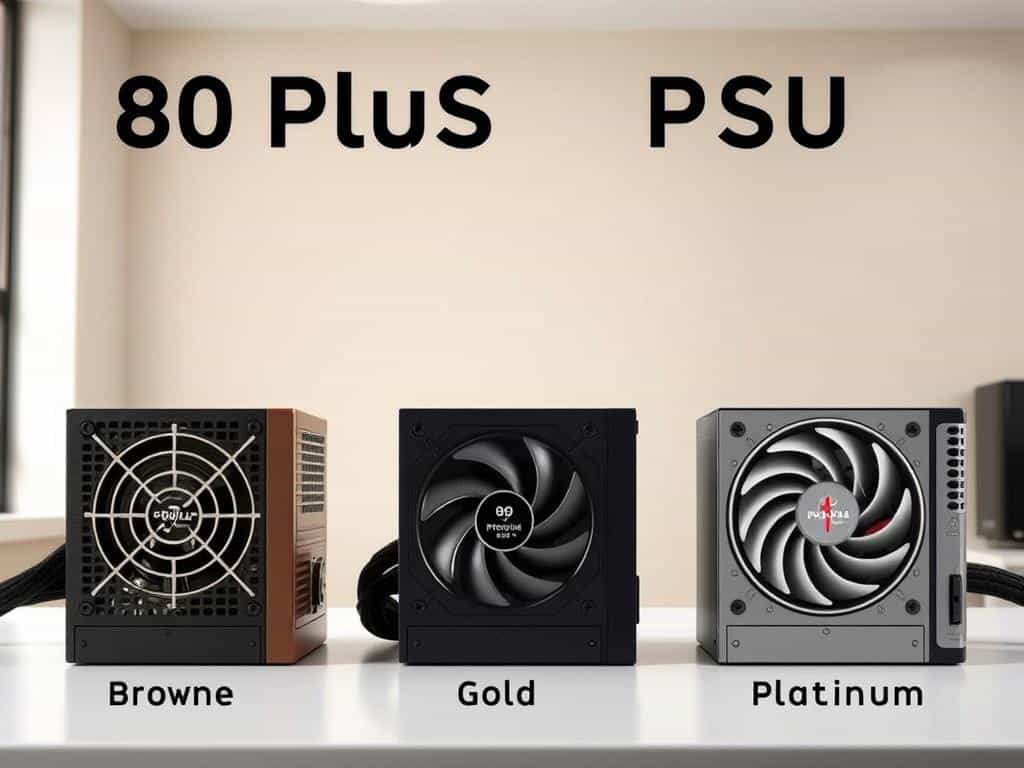
PSU Efficiency Ratings Explained
When looking at power supply units (PSUs), it’s key to compare their ratings. Ratings like 80+ Bronze, Gold, and Platinum show how efficient a PSU is. This efficiency affects how well it works and its long-term cost.
A Bronze PSU works at least 82% efficiently at full load. Gold-rated PSUs do better, reaching about 87% efficiency. The top, Platinum-rated PSUs, can hit 89% efficiency. This shows why choosing a higher-rated PSU is good for demanding systems.
Comparing 80+ Bronze, Gold, and Platinum Ratings
For example, a 700W Gold-rated PSU uses 791W from the wall. But a Platinum-rated PSU only needs 777W. This difference is big, which is important for systems that use a lot of power.
Also, higher-rated PSUs often have longer warranties, from 5 to 10 years. This shows they are not just efficient but also reliable. Manufacturers stand behind their top-rated products, showing their confidence in quality.
Impact of Efficiency on Component Lifespan
Efficiency in a PSU is more than just saving money. It also helps your system’s parts last longer. High-efficiency PSUs make less heat, which is a big cause of wear and tear.
Less heat means parts can work better, even when they’re under a lot of load. Choosing a more efficient PSU means your system is more durable. It also keeps other parts safe from problems caused by less efficient PSUs.
Conclusion
Choosing the right power supply unit (PSU) is key. Knowing about PSU ratings helps a lot. Efficiency ratings show how well a PSU changes AC power to DC.
PSUs with higher ratings, like Gold or Platinum, save money over time. They also make my components last longer. This is because they lose less energy and heat.
When picking a PSU, I think about how I use it, local electricity prices, and my budget. The right choice depends on my devices and how often they’re used. For example, a Bronze PSU is good, but Gold or Platinum can save more money, even with devices running long hours.
Getting a high-efficiency PSU is smart, not just to save money. It makes my computer work better and last longer. This careful choice can save me money and improve my system’s performance.
