Did you know that by 2025, over 60% of consumers will want to know where their products come from? This shows a big change in retail, thanks to new tech and what people want. Generative AI, for example, could make shopping 70% more personal, making customers happier.
This move towards being open and personal is key for both stores and shoppers. People want real connections with what they buy.
Looking ahead to 2025, I’ll talk about how tech and what people want will change how we shop. The future of retail is about more than just buying things. It’s about making real connections.
Key Takeaways
- 60% of consumers prioritize supply chain transparency by 2025.
- Generative AI to boost customer engagement by up to 70%.
- 40% of Gen Z influenced by social media reviews for purchasing decisions.
- Resale market projected to reach $64 billion by 2025.
- 30% of consumers are attracted to climate-conscious retail initiatives.
The Rise of Generative AI in Retail
Generative AI is changing the retail world. It lets brands give shoppers experiences that match their likes. This change means retailers now focus more on personalizing shopping, moving away from old ways.
By using generative AI, stores can look at lots of data. They can then make better recommendations, adjust prices, and make customers happier.
How AI is Personalizing the Shopping Experience
AI is making shopping more personal. Almost 75 percent of shoppers want personalized advice before buying. This has made retailers use advanced algorithms to match offers with what customers like.
This focus on personalization can increase sales by 10 to 15 percent. It shows how important AI is for retailers.
Examples of AI in Action: Walmart and Albert Heijn
Walmart and Albert Heijn show how AI improves shopping. Walmart uses AI to give shoppers personalized tips, like during big events. This makes shopping more than just buying things.
Albert Heijn is known for its smart shopping. It creates gourmet meal plans based on what customers have in their fridge. These stories show how generative AI can make shopping unique for everyone.
Consumer Behavior and Changing Store Experiences
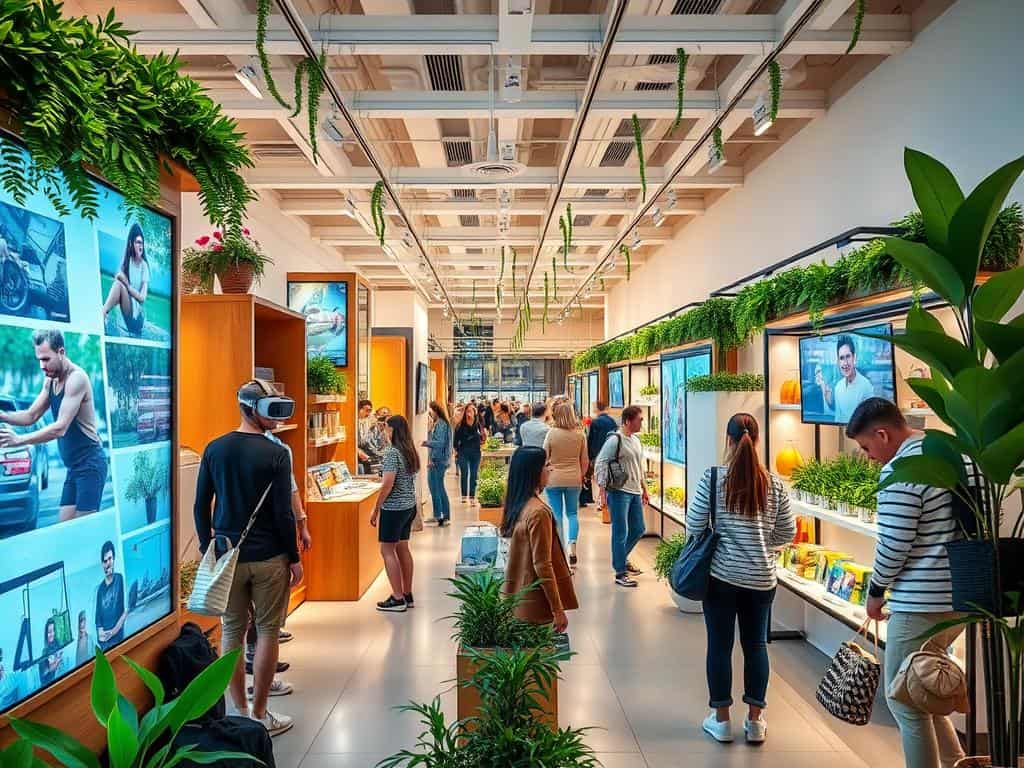
Shopping habits are changing, and so are store experiences. Today, people want more than just products. They want experiential shopping that connects them emotionally with brands. This change shows how important it is for businesses to keep up with what customers want.
Experiential Shopping: The Next Big Thing
Experiential shopping is changing how we shop. Now, over 60% of shoppers want personalized experiences. Stores are becoming places where people can engage and have fun, thanks to interactive elements.
Using technology like smart mirrors can really boost retail engagement. It shows how important it is to innovate in physical stores.
The Role of Pop-Up Stores in Engaging Customers
Pop-up stores are key in today’s shopping world. They offer something new and exclusive, drawing in 40% of shoppers. Stores like Nordstrom and Bloomingdale’s use pop-ups to create excitement around special offers.
These temporary stores are great because they can quickly respond to what customers want. They turn shopping into an event, not just a routine.
Retail Trends Shaping the Future
Retailers face a fast-changing market. Three key trends are supply chain transparency, social commerce, and sustainable practices. These trends help retailers adapt and succeed in the future.
Supply Chain Transparency: A Demand for Authenticity
Brands now focus on supply chain transparency to build trust. Consumers want to know where and how their items are made. Retailers who share this information attract mindful shoppers.
This openness is not just right; it’s a big plus. It shows honesty in retail operations and wins over those who value truth.
Social Commerce: The Integration of Shopping and Social Media
Shopping and social media are now one. TikTok and Instagram are key for social media shopping. They’re big with Gen Z and boost consumer engagement.
Working with influencers and live events make shopping fun and spontaneous. This new way changes how we find and buy products.
The Importance of Sustainable Practices
Sustainability is key for shoppers now. Retailers must adopt sustainable retail practices. This means cutting down on environmental harm and starting initiatives like tracking carbon footprints.
Shoppers prefer brands that care about the planet. Those who focus on climate-conscious shopping gain loyal customers. Sustainability is now a must for staying relevant.
Conclusion
The retail world of 2025 is changing fast. New technologies like generative AI and shifting consumer tastes are key. These changes show a future where tech and personal touches are essential.
Even with digital growth, 56% of US shoppers love in-person shopping. This shows that real connections in stores are just as important.
Now, let’s look at the market. Retailers focusing on being green and open win over 65% of customers who want unique service. These moves are not just wanted; they’re needed to build trust and keep customers coming back.
By using AI and omnichannel solutions, businesses can improve and meet the demand for special experiences. This is how they stay ahead.
In short, the retail future depends on keeping up with these trends. Stores that focus on real connections, being eco-friendly, and using tech will do well. They will not just make it; they will excel in this fast-changing world.
With a mindset that meets today’s shopper needs, the next few years will change retail forever. It’s an exciting time for the industry.
