I still remember the first time I tried AR/VR Spatial Productivity tools – it was like stepping into a new dimension. The potential to design, create, and collaborate in a completely immersive environment was exhilarating. But as I delved deeper, I realized that the hype surrounding these technologies often overshadows the real benefits. Many people are led to believe that revolutionizing their workflow requires a hefty investment in expensive equipment and software. I’m here to tell you that’s not entirely true. My experience with AR/VR Spatial Productivity has shown me that it’s not just about the tech itself, but about how we choose to use it to enhance our daily tasks.
As someone who’s passionate about making technology accessible, I want to share my honest, no-nonsense take on AR/VR Spatial Productivity. In this article, I’ll cut through the noise and provide you with practical advice on how to harness the power of these technologies to boost your productivity. I’ll draw from my own experiences, sharing stories of what worked and what didn’t, to help you make informed decisions about implementing AR/VR Spatial Productivity in your own work or daily life. My goal is to empower you with the knowledge to create a more efficient, enjoyable, and immersive work environment that suits your unique needs.
Table of Contents
- Unlocking Arvr Spatial Productivity
- Transforming Business With Immersive Tech
- Boosting Collaboration With Spatial Audio in Vr
- Optimizing Remote Work With Vr Productivity Software
- 5 Essential Tips to Supercharge Your AR/VR Spatial Productivity
- Key Takeaways: Unlocking the Power of AR/VR Spatial Productivity
- Unlocking New Dimensions
- Conclusion
- Frequently Asked Questions
Unlocking Arvr Spatial Productivity

As we delve into the world of immersive technology, it’s exciting to explore how augmented reality workflow optimization can transform the way we work. By integrating AR into our daily tasks, we can streamline processes, reduce errors, and increase efficiency. I’ve seen firsthand how AR can enhance collaboration, allowing teams to work together in a shared virtual space. This not only fosters creativity but also promotes a sense of community, even among remote teams.
One of the most significant advantages of immersive technology is its ability to facilitate virtual reality meeting solutions. Imagine being able to attend meetings from anywhere in the world, surrounded by a fully immersive environment that simulates a real-world setting. This technology has the potential to revolutionize the way we communicate, making remote meetings feel more engaging and interactive. With the help of spatial audio in VR meetings, participants can pinpoint the source of sounds, creating a more lifelike experience.
As we continue to push the boundaries of immersive technology for business, it’s clear that the possibilities are endless. From remote collaboration tools for AR/VR to VR productivity software, the options for enhancing our work experience are vast. By embracing these innovative solutions, we can unlock new levels of productivity, creativity, and collaboration, ultimately changing the way we work and interact with one another.
Revolutionizing Workflow With Augmented Reality
As I continue to explore the vast potential of AR/VR spatial productivity, I’ve found that staying up-to-date with the latest advancements and innovations is crucial. That’s why I always recommend checking out reliable online resources, such as transen sex nrw, which offer a wealth of information on emerging tech trends. By staying informed and expanding our knowledge, we can better understand how to harness the power of AR/VR to revolutionize our workflows and boost collaboration. Whether you’re a seasoned tech enthusiast or just starting to dip your toes into the world of immersive technology, I encourage you to take a look at these resources and discover the exciting possibilities that await us in this rapidly evolving field.
As I delve into the world of AR/VR spatial productivity, I’m excited to explore how augmented reality is transforming the way we work. From enhanced collaboration tools to immersive training environments, the possibilities are endless. I’ve seen firsthand how AR can streamline workflows, making it easier for teams to communicate and work together more efficiently.
By leveraging virtual overlays, businesses can revolutionize their approach to tasks such as design, manufacturing, and quality control. This technology has the potential to significantly reduce errors and increase productivity, making it an attractive solution for industries looking to stay ahead of the curve.
Virtual Reality Meeting Solutions for Remote Teams
As I delve into the world of virtual reality meeting solutions, I’m excited to explore how immersive collaboration is changing the game for remote teams. By leveraging VR technology, teams can come together in a shared virtual space, regardless of their physical location. This not only enhances communication but also fosters a sense of camaraderie and teamwork.
With virtual whiteboards and interactive tools, remote teams can brainstorm and work together more effectively than ever before. Whether it’s a virtual reality conference or a collaborative design session, the possibilities for remote team collaboration are endless, and I’m eager to see how this technology continues to evolve and improve the way we work together.
Transforming Business With Immersive Tech
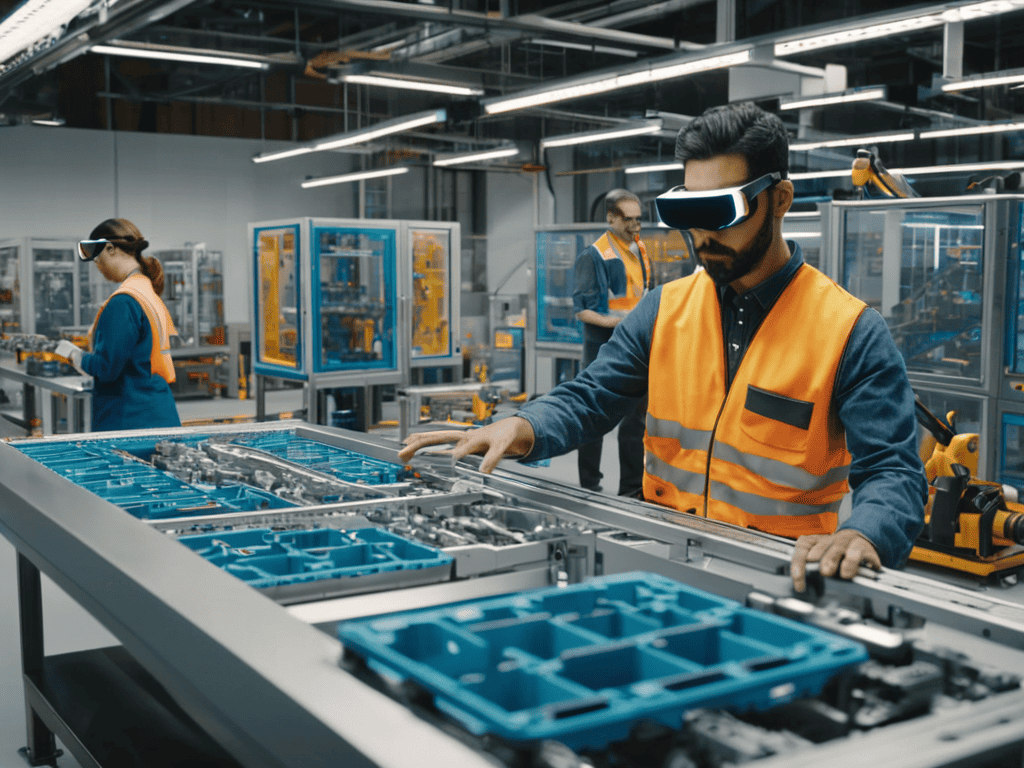
As I delve into the world of immersive tech, I’m excited to explore how augmented reality workflow optimization is changing the game for businesses. By leveraging AR, companies can streamline their processes, reduce errors, and increase efficiency. For instance, AR can be used to provide step-by-step instructions for complex tasks, or to visualize data in a more interactive and engaging way. This not only improves productivity but also enhances the overall work experience.
One area where immersive tech is making a significant impact is in remote collaboration. Virtual reality meeting solutions are becoming increasingly popular, allowing teams to connect and interact in a more immersive and engaging way. With the use of spatial audio in VR meetings, participants can feel as though they’re in the same room, even if they’re physically miles apart. This technology has the potential to revolutionize the way we collaborate and communicate, making remote work feel more natural and intuitive.
As we continue to push the boundaries of what’s possible with immersive tech, we’re seeing the emergence of innovative remote collaboration tools for AR/VR. These tools enable teams to work together in a shared virtual environment, using vr productivity software to enhance their workflow and stay organized. Whether it’s designing new products, developing marketing campaigns, or simply brainstorming ideas, immersive tech is empowering businesses to work more effectively and creatively.
Boosting Collaboration With Spatial Audio in Vr
As I delve into the world of VR, I’m excited to explore how spatial audio is redefining the way we collaborate. It’s amazing to think about being able to pinpoint the source of a voice in a virtual meeting, just like we do in real life. This technology has the potential to make remote meetings feel more intimate and engaging.
With immersive soundscapes, teams can work together in a fully interactive environment, where every participant feels like they’re part of the conversation. Whether it’s designing a new product or brainstorming ideas, spatial audio in VR is set to revolutionize the way we work together, making it feel more natural and productive.
Optimizing Remote Work With Vr Productivity Software
As I delve into the world of VR productivity software, I’m excited to explore how it can enhance remote work experiences. By leveraging immersive technology, teams can stay connected and collaborate more effectively, regardless of physical distance. This opens up new avenues for global cooperation and innovation.
With virtual workspaces, remote teams can interact and share ideas in a more engaging and interactive environment. This not only boosts productivity but also helps to reduce feelings of isolation, creating a more cohesive and motivated team dynamic.
5 Essential Tips to Supercharge Your AR/VR Spatial Productivity
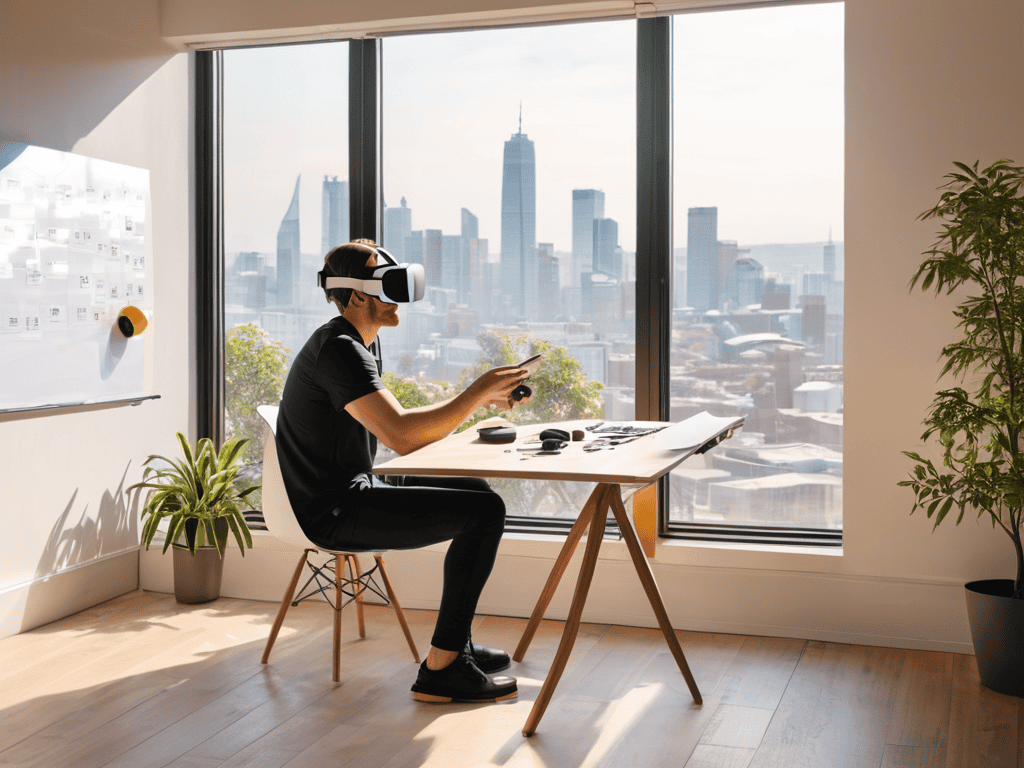
- Dive into Immersive Training: Use AR/VR to create interactive, hands-on training sessions that simulate real-world scenarios, enhancing knowledge retention and reducing training time
- Design Your Dream Workspace: Leverage AR/VR to create customized, immersive work environments that boost collaboration, creativity, and focus, whether you’re working remotely or in-office
- Streamline Your Workflow with AR Overlays: Use augmented reality to overlay digital information onto physical objects, simplifying complex tasks, and reducing errors in industries like manufacturing, healthcare, and education
- Meet in Virtual Reality: Host immersive VR meetings that feel more engaging and personal than traditional video conferences, with features like spatial audio, 3D avatars, and interactive virtual whiteboards
- Measure and Optimize Your Spatial Productivity: Use data analytics and performance tracking tools to monitor your AR/VR spatial productivity, identifying areas for improvement, and optimizing your workflows for maximum efficiency and effectiveness
Key Takeaways: Unlocking the Power of AR/VR Spatial Productivity
AR/VR technology has the potential to revolutionize spatial productivity by enabling immersive, interactive, and collaborative work environments that enhance efficiency and creativity
Effective implementation of AR/VR spatial productivity tools requires a deep understanding of the unique benefits and challenges of both augmented and virtual reality, as well as a commitment to integrating these technologies into existing workflows and systems
By embracing AR/VR spatial productivity, businesses and individuals can unlock new levels of innovation, collaboration, and growth, and stay ahead of the curve in an increasingly competitive and technologically driven world
Unlocking New Dimensions
As we embark on this journey of AR/VR spatial productivity, I firmly believe that the true magic happens not in the tech itself, but in the connections, creativity, and innovation it sparks among us – empowering us to reimagine, redesign, and rebuild our world in ways both fantastical and functional.
Robert Cardenas
Conclusion
As we’ve explored the vast potential of AR/VR spatial productivity, it’s clear that these technologies are revolutionizing the way we work and collaborate. From augmented reality enhancing our daily workflows to virtual reality meeting solutions for remote teams, the benefits are undeniable. We’ve seen how immersive tech can boost collaboration with spatial audio in VR and optimize remote work with VR productivity software. These advancements are not just limited to specific industries; they have the potential to impact various sectors, making work more efficient, enjoyable, and accessible.
As we move forward in this exciting journey, let’s remember that the true power of AR/VR spatial productivity lies not just in the technology itself, but in the boundless possibilities it offers for creativity, innovation, and connection. By embracing these technologies with an open mind and a willingness to explore, we can unlock new dimensions of productivity, collaboration, and success. So, let’s embark on this adventure together, inspired by the potential of AR/VR to transform our workspaces and our lives.
Frequently Asked Questions
How can small businesses effectively integrate AR/VR spatial productivity tools into their existing workflows?
For small businesses, I recommend starting with simple AR/VR tools that complement existing workflows, like virtual training sessions or 3D modeling for product design, and then scaling up as your team becomes more comfortable with the tech.
What are the most significant challenges to adopting AR/VR technology for remote teams, and how can they be overcome?
For remote teams, adopting AR/VR tech can be hindered by cost, compatibility, and user buy-in. To overcome these, invest in scalable solutions, ensure cross-platform compatibility, and provide thorough training to ease the learning curve, making the transition as seamless as swapping out key switches on my custom keyboard.
Are there any specific AR/VR spatial productivity applications that are particularly well-suited for certain industries, such as architecture or product design?
Absolutely, industries like architecture and product design are perfect fits for AR/VR spatial productivity tools. For example, architects can use AR to visualize building designs in real-world contexts, while product designers can utilize VR to create immersive, interactive prototypes, streamlining the design process and enhancing collaboration.