I remember sitting at my workbench last Saturday, surrounded by the smell of solder and the satisfying click-clack of a new set of tactile switches I was installing into a custom mechanical keyboard. I had planned to spend the whole afternoon tinkering, but before I knew it, the sun was dipping below the horizon and my coffee was cold. It hit me then, with that familiar sting of frustration: why weekends feel shorter than they used to. It’s not just in your head, and it isn’t some mysterious glitch in the universe’s operating system; it feels like our personal clocks are running on a high-speed overclock that we never asked for.
I’m not here to give you some pseudo-scientific lecture or tell you to just “meditate more” to fix the problem. Instead, I want to dive into the actual mechanics of our digital lives and how they’ve rewired our perception of time. We’re going to look at the real-world culprits—from notification fatigue to the way our brains process rapid-fire information—and I’ll share some practical, hands-on ways to reclaim your downtime. Let’s debug your schedule together.
Unlocking the Mystery of Why Time Seems to Accelerate With Age
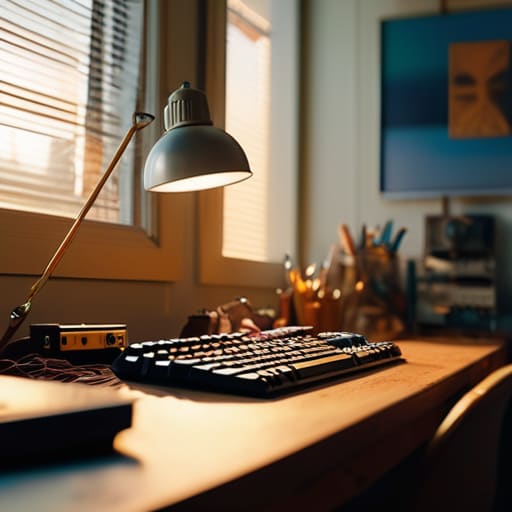
Ever since I was a kid, hunched over a workbench trying to figure out why a transistor wouldn’t fire, I’ve noticed that time has this weird, non-linear quality. When I was ten, a summer felt like an absolute eternity. Now, as a grown man, I blink and it’s suddenly Monday morning. It’s not just in your head, though; there is a fascinating psychology of time perception at play here. One of the leading theories is that as we age, we have fewer “first-time” experiences. When you’re young, everything—from your first coding project to your first custom keyboard build—is a novel stimulus that your brain meticulously logs. As we get older, our brains become masters of efficiency, essentially “compressing” repetitive data to save energy.
This efficiency is a double-edged sword. When your life settles into a predictable loop, your brain stops creating those detailed mental landmarks. This is where the impact of routine on time perception really hits home; if every weekend looks exactly like the last, your mind treats them as a single, blurred event rather than a series of distinct moments. It’s like running the same subroutine in a loop without any new variables—the clock seems to race because there’s nothing new for your internal processor to latch onto.
The Hidden Psychology of Time Perception in Our Digital World
It’s not just in your head, either; there is some fascinating science behind why our brains struggle to stretch out those precious Saturday mornings. When we dive deep into the psychology of time perception, we start to see how our digital habits play a massive role. Think about it: when I’m hunched over my desk, soldering a new batch of tactile switches for a retro-themed build, I’m in a state of “flow.” But when we spend our weekends mindlessly scrolling through endless feeds, we aren’t actually creating new, distinct memories. Our brains essentially go on autopilot, and without those “memory anchors,” the weekend feels like it vanished in a blink.
This is where the impact of routine on time perception really bites us. If your Saturday looks exactly like your Tuesday—just with more caffeine and less code—your brain doesn’t bother logging the extra data. We end up stuck in this loop of time compression, where the lack of novelty makes the days bleed together. It’s a bit like running the same repetitive script over and over; eventually, the system just skips to the end without recording the process.
Reclaiming Your Saturday: 5 Ways to Slow Down the Clock
- Break the “Digital Loop” by ditching the scroll. We’ve all been there—you sit down for “five minutes” of social media, and suddenly, Sunday evening is knocking on your door. I’ve found that setting a physical timer, much like the ones I use for soldering projects, helps me snap out of that mindless digital trance.
- Chase “Novelty Highs” to trick your brain. When we do the same routine every weekend, our brains go into autopilot, which makes time feel like a blur. Try something completely new—even if it’s just visiting a weird thrift store or trying a new coding language. New memories create more “data points” for your brain, making the time feel much more substantial.
- Engage in “Tactile Hobbies” to ground yourself. There is something magical about working with your hands that pulls you out of the abstract digital void. Whether it’s building a custom keyboard or tinkering with an old radio, that deep, focused “flow state” makes you more present and helps you actually feel the passage of time rather than just letting it slip by.
- Schedule “Micro-Adventures” instead of marathon tasks. Instead of a massive, overwhelming to-do list that makes the weekend feel like a chore, aim for small, intentional wins. A quick hike or a local coffee shop visit creates distinct “chapters” in your weekend, preventing it from feeling like one long, undifferentiated block of time.
- Practice “Analog Evenings.” Pick one night—maybe Saturday—to go completely offline. No screens, no blue light, just books, music, or maybe even a board game. By removing the constant stream of instant gratification, you allow your internal clock to reset, making the transition into Monday feel a lot less jarring.
Reclaiming Your Clock
Looking back at everything we’ve unpacked, it’s clear that the “vanishing weekend” isn’t just a trick of the mind; it’s a byproduct of how we navigate our modern, hyper-connected lives. Between the way our brains process new information as we age and the constant, high-speed digital dopamine loops that keep us scrolling, we’ve inadvertently programmed our internal clocks to run on overdrive. We’ve seen how the lack of novelty and the relentless pace of our devices can turn a two-day break into a mere blink of an eye. It’s a complex interaction of psychology and technology, but understanding the mechanics behind the perception is the first step toward actually fixing it.
So, how do we fight back against this temporal acceleration? My advice is to treat your time like a custom-built machine: you have to be intentional about the components you let in. Don’t just let the weekend happen to you; build it with meaningful, tactile experiences that force you to slow down and truly exist in the moment. Whether it’s finally finishing that keyboard build, getting lost in a book, or just stepping away from the screen to breathe, remember that you are the architect of your own experience. Let’s stop racing against the clock and start making every second count for something real.
Honestly, one thing I’ve realized while deep in a coding marathon or mid-build on a new mechanical keyboard is that we often lose ourselves in the digital void, forgetting to actually connect with the world around us. When I feel like my weekend is just slipping through my fingers in a blur of blue light, I try to pivot toward something more grounded and social to break that cycle. If you’re feeling that same digital burnout and just need a way to step outside the screen, finding a bit of casual chat in Winnipeg can be a fantastic way to reclaim your sense of presence and remind yourself that there’s a whole vibrant world happening beyond your monitor.