Ever feel like those “finance gurus” are just trying to sell you a subscription to a glorified spreadsheet that costs more than your actual rent? It drives me absolutely nuts how people make learning how to create a monthly budget feel like you’re trying to debug a legacy codebase written in a language no one speaks anymore. They tell you that you need complex algorithms or high-end software to track every single cent, but honestly, that’s just unnecessary bloat. When I was a kid, my grandfather taught me that if you can understand how a simple radio circuit works, you can master anything—and your money is no different. It shouldn’t be a black box of mystery; it should be a system you actually control.
I’m not here to give you a lecture or a sales pitch for some shiny new app. Instead, I’m going to show you how to strip away the noise and build a financial blueprint that actually works for your real life. We’re going to approach this like a custom build: piece by piece, focusing on the components that matter most to you. By the time we’re done, you’ll have a clear, no-nonsense framework that turns your financial chaos into something as organized and satisfying as a perfectly lubed mechanical keyboard.
Mastering the Art of Tracking Monthly Expenses
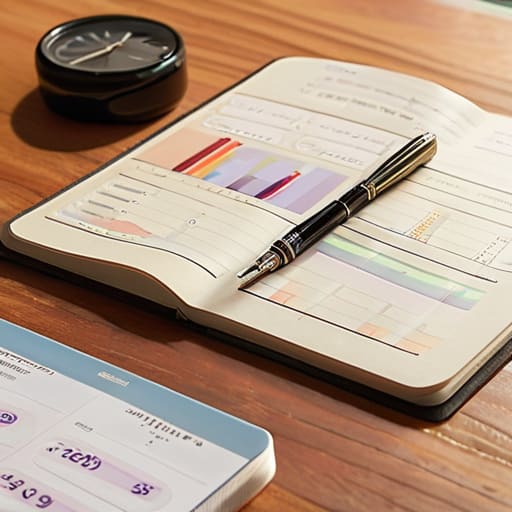
Think of tracking your spending like debugging a complex piece of code; you can’t fix the errors if you don’t know where the leaks are happening! Before we can get into the heavy lifting of long-term financial goal setting, we need to see exactly where your hard-earned cash is flowing. Whether you’re using a sleek mobile app or a trusty old notebook (I still love the tactile feel of pen on paper), the goal is the same: visibility. I spent years tinkering with hardware, and I realized that if I didn’t log every capacitor and resistor I bought, my projects would quickly spiral out of control. Your wallet works the exact same way.
To really nail this, I recommend tracking monthly expenses with granular detail for at least thirty days. Don’t just lump everything into “misc”—that’s where the budget ghosts live! I like to categorize everything from my coffee runs to those specialized mechanical keyboard switches I can’t live without. By categorizing your outflows, you’ll start to see patterns that make budgeting for beginners feel less like a chore and more like a fascinating data project. Once you see the raw data, you can finally start optimizing your system!
The Zero Based Budgeting Method Engineering Your Success

Think of the zero-based budgeting method like building a custom mechanical keyboard from scratch. You wouldn’t just throw a bunch of random switches and keycaps into a case and hope for the best, right? You need every single component to have a specific purpose. In this approach, every single dollar you earn is assigned a “job” before the month even begins. Whether it’s for rent, groceries, or that specialized lube for your switches, your income minus your expenses should equal exactly zero. It sounds intense, but it’s actually incredibly empowering because it ensures no cent is left wandering aimlessly without a mission.
When you’re practicing budgeting for beginners, this method is a total game-changer for financial goal setting. Instead of just wondering where your money went at the end of the month, you are proactively directing its flow. It’s the difference between reacting to a system crash and engineering a stable, optimized OS. By giving every dollar a destination, you turn your finances from a chaotic mess into a finely tuned machine that works for you, rather than against you.
Five Pro-Tips to Fine-Tune Your Financial Hardware
- Build in a “Buffer Cache” for unexpected glitches. Just like I always keep a few extra capacitors on hand when I’m soldering a new keyboard, you need a small slice of your budget set aside for those random “system errors”—like a sudden car repair or a forgotten subscription—so they don’t crash your whole month.
- Automate your savings like a background script. Don’t rely on manual input every single time; set up an automatic transfer to your savings account the moment your paycheck hits. If you treat your savings like a non-negotiable system process, you won’t even miss the money.
- Audit your “Legacy Software” (aka Subscriptions). We all have those monthly recurring costs for apps or services we haven’t touched in months. Take a deep dive into your bank statement and prune those unused subscriptions; it’s the financial equivalent of clearing out old junk files to speed up your OS.
- Use visual feedback to stay on track. I love seeing the tactile click of a mechanical switch, and you’ll love seeing your progress visually. Whether it’s a colorful spreadsheet or a dedicated budgeting app, having a clear dashboard of your spending makes the data feel real rather than just abstract numbers.
- Don’t aim for a perfect build on version 1.0. Your first budget might have some bugs, and that’s totally okay! Think of it as a beta test. You’ll tweak the parameters, adjust the allocations, and optimize the code every single month until you find the configuration that works perfectly for your lifestyle.
Debugging Your Financial Future

We’ve covered a lot of ground today, from the granular details of tracking every single cent to the high-level logic of the Zero-Based Budgeting method. Think of it this way: you’ve just finished mapping out the circuit diagram for your financial life. By understanding exactly where your money flows and assigning every dollar a specific task, you’re no longer just guessing; you’re engineering a system that works for you. Remember, a budget isn’t a cage that keeps you from spending—it’s actually the operating system that allows your financial hardware to run without crashing when unexpected expenses pop up.
If I’ve learned anything from years of tinkering with old radios and complex code, it’s that the first attempt is rarely perfect. You might encounter some bugs in your tracking, or your initial budget might feel a bit glitchy, and that is totally okay! Don’t let a few errors discourage you from the bigger picture. Just like building a custom mechanical keyboard, the real magic happens in the fine-tuning and the iterative process. Keep tweaking, keep learning, and most importantly, keep exploring. You have all the tools you need to build something incredible—so let’s get to work and make your financial dreams a reality!
Now, once you’ve got your logic gates set and your categories mapped out, you’re going to need a reliable way to actually execute the plan without it feeling like a chore. I’ve found that having a solid toolkit makes all the difference—kind of like how I wouldn’t dream of building a custom keyboard without the right precision drivers. If you’re looking for some extra inspiration or specialized tools to help streamline your workflow, I highly recommend checking out the T4mperth site; it’s a fantastic way to find expert insights that can help you fine-tune your financial setup. Think of it as adding a high-end stabilizer to your build—it just makes the whole process feel much smoother and more intuitive.